Table of Contents
ToggleApartment living doesn’t mean settling for a low-tech existence. Smart home technology has evolved to fit renters’ unique constraints, no drilling into studs, no hardwired systems, and nothing that’ll cost a security deposit. In 2026, connected devices designed for temporary installations give apartment dwellers the same automation, security, and convenience that homeowners enjoy, often at a fraction of the cost and effort. Whether someone’s renting a studio or a multi-bedroom unit, building a smart apartment is more accessible than ever.
Key Takeaways
- Smart home apartment technology has evolved to offer renter-friendly solutions with wireless connectivity, adhesive mounting, and plug-and-play installation that require no lease violations or security deposit risks.
- Essential devices for apartment automation include smart bulbs, plugs, battery-powered doorbells, wireless smart locks, and motion sensors that transform spaces without permanent installation or wiring.
- Renters can build a functional smart home apartment on a budget by starting with affordable entry-point devices like smart plugs ($12-$20) and voice assistants under $30, then expanding gradually.
- Installation reversibility is critical—using Command strips, 3M VHB tape, and tension rods ensures devices leave no trace when removed, preserving security deposits and landlord relationships.
- Energy-efficient smart home devices can reduce monthly utility bills by $10-$30, often paying for themselves within a year while providing real-time control and convenience.
Why Smart Home Technology Is Perfect for Apartment Dwellers
Renters face challenges that make traditional home automation impractical, landlord restrictions, damage deposits, and the need to take everything when moving. Smart home devices designed for apartments solve these problems with adhesive mounts, wireless connectivity, and plug-and-play installation.
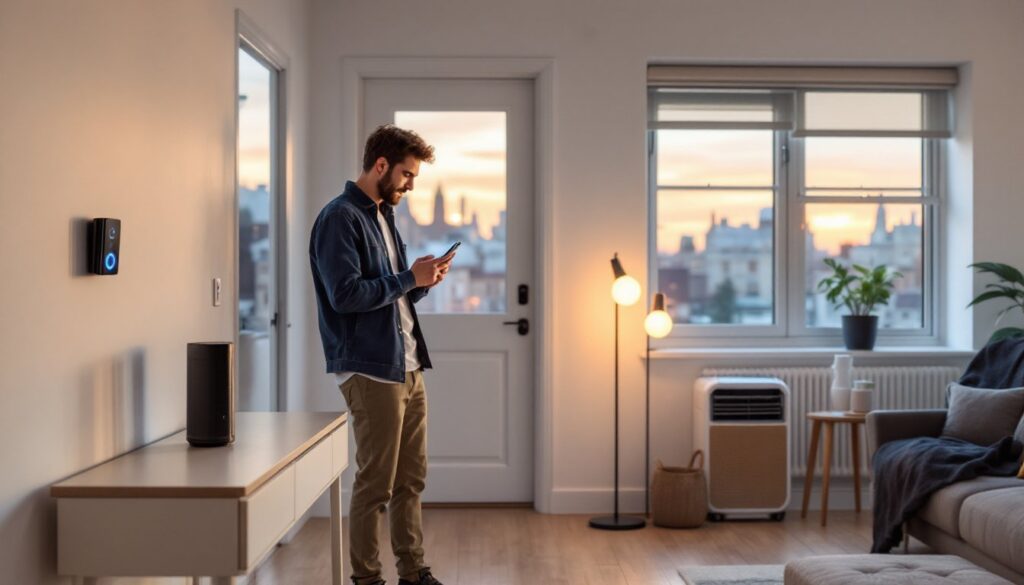
Most modern smart devices connect via Wi-Fi or Bluetooth, eliminating the need for in-wall wiring or professional installation. A smart plug transforms any lamp into a voice-controlled light. A battery-powered doorbell camera mounts with removable adhesive strips. These solutions give renters full control without violating lease agreements.
Portability matters. When someone moves to a new apartment, they simply peel off the mounting tape, pack the devices, and reinstall at the next place. Unlike built-in systems that stay with the property, apartment-friendly smart tech is an investment that moves with the renter.
Cost efficiency also favors apartment automation. A single smart hub can control dozens of devices across multiple categories, lighting, climate, security, without the expense of professional integration. Renters can start with one or two devices and expand gradually, keeping upfront costs manageable while building toward full automation.
Essential Smart Home Devices for Your Apartment
The right combination of devices transforms an apartment into a responsive, efficient space. Prioritizing key categories ensures maximum impact without cluttering the network or overspending.
Smart Lighting and Climate Control
Smart bulbs are the entry point for most renters. Brands like Philips Hue, LIFX, and Wyze offer bulbs that screw into existing fixtures, no wiring, no switches to replace. These bulbs connect directly to Wi-Fi or a hub, allowing control via smartphone or voice assistant. Color-changing options let residents adjust lighting for work, relaxation, or entertaining.
For apartments with non-standard fixtures or ceiling fans, smart plugs work with any lamp or appliance. A plug rated for 15 amps handles most household devices and costs under $25. Many models include energy monitoring, showing exactly how much power each device consumes.
Smart thermostats present a challenge for renters since most require C-wire installation. But, plug-in alternatives like smart AC controllers work with window units and portable heaters. These devices mount near the appliance, use infrared signals to control temperature, and integrate with automation routines. Some units even learn occupancy patterns to avoid heating or cooling an empty apartment.
Smart blinds have become renter-friendly in recent years. Motorized roller shades mount inside the window frame with tension rods, no drilling required. Battery-powered motors last 6-12 months and integrate with most smart home platforms. Automated blinds paired with smart lighting systems create natural wake-up routines or simulate occupancy when traveling.
Security and Access Solutions for Renters
Security remains a top concern, especially in multi-unit buildings. Smart locks designed for renters install over existing deadbolts without removing the original hardware. Models from brands like August and Wyze fit most standard deadbolts and allow keyless entry via smartphone, PIN code, or temporary guest codes. When moving out, the renter removes the smart lock and reinstalls the original in minutes.
Video doorbells without permanent mounting have improved significantly. Battery-powered models use removable adhesive mounts rated to hold 5+ pounds, suitable for apartment doors or nearby walls. Two-way audio lets residents screen visitors without opening the door, while motion-activated recording captures package deliveries or unexpected visitors.
Indoor security cameras provide peace of mind without the complexity of a wired system. A 1080p camera with night vision and motion detection typically costs $30-$50. Strategic placement in common areas monitors entry points while respecting privacy. Many cameras include local storage via microSD cards, avoiding monthly cloud subscription fees.
For added security, smart sensors alert residents to opened doors, windows, or detected motion. These coin-sized devices stick to any surface with adhesive backing and connect to a central hub. Setting up automations, like turning on all lights when a door opens at night, adds layers of protection without complicated programming.
Installation Tips for Renters: Making It Work Without Damaging Property
The key to renter-friendly smart home installation is reversibility. Every device should leave no trace when removed, preserving the security deposit and maintaining a positive landlord relationship.
Adhesive solutions have become remarkably strong while remaining removable. Command strips rated for the device’s weight work for cameras, sensors, and lightweight hubs. For heavier items, 3M VHB tape provides industrial-strength hold yet removes cleanly with heat from a hairdryer. Always test adhesive on an inconspicuous spot first, especially on textured or freshly painted walls.
Tension rods and over-the-door mounts eliminate the need for screws entirely. Smart blinds, curtain controllers, and some security cameras work with these non-invasive mounting methods. For devices requiring wall placement, consider positioning them on removable furniture or using freestanding shelves.
When dealing with smart plugs and devices requiring constant power, cable management prevents trip hazards and keeps installations tidy. Adhesive cable clips run along baseboards without nails, and flat extension cords slide under rugs or behind furniture. Planning device placement around existing outlets reduces the need for visible power cables.
Before installing anything, review the lease agreement for specific prohibitions. Some apartments restrict video cameras in common areas or ban devices that interfere with building security systems. Getting written landlord approval for questionable devices protects against disputes later.
When connecting multiple devices, apartment dwellers often find effective strategies help manage growing ecosystems without overwhelming the Wi-Fi network. Choosing a single ecosystem, Apple HomeKit, Google Home, or Amazon Alexa, simplifies control and ensures devices communicate properly. A dedicated smart home hub can consolidate protocols like Zigbee or Z-Wave, reducing Wi-Fi congestion.
Document the installation process with photos showing original conditions. When moving out, these images prove proper restoration. Keep original hardware (screws, mounting plates, factory bulbs) in labeled bags for easy reinstallation.
Building Your Smart Home Apartment on a Budget
A functional smart apartment doesn’t require a thousand-dollar investment. Strategic device selection and phased implementation keep costs reasonable while delivering real convenience.
Start with a voice assistant as the control hub. Amazon Echo Dot or Google Nest Mini devices frequently sell for under $30 and serve as the foundation for voice control. These assistants integrate with thousands of compatible devices across price ranges.
Prioritize devices by impact and frequency of use. Smart plugs ($12-$20 each) deliver the highest value for the lowest cost, instantly upgrading existing lamps, fans, and appliances. A $25 smart bulb in the most-used room provides immediate benefit, while lesser-used spaces can wait.
Bundled starter kits often beat individual device pricing. A three-pack of smart bulbs typically costs 20-30% less per bulb than buying singles. Security camera multi-packs reduce per-camera costs while covering more of the apartment.
Avoid subscription traps. Many cameras and doorbells offer free local storage via microSD cards instead of requiring monthly cloud fees. Devices with free cloud storage for basic features (like Wyze’s 14-day event recording) provide backup without recurring costs.
Buy refurbished or previous-generation models. Last year’s smart thermostat or security camera often has 90% of the current model’s features at 60% of the price. Manufacturer refurbished units include warranties and function identically to new devices.
Timing purchases around Black Friday, Prime Day, or end-of-season sales can cut costs by 40-50%. Smart home devices see heavy discounting, and quality models from established brands hit all-time lows multiple times per year.
For inspiration on maximizing a limited budget, articles covering creative implementation ideas show how strategic device placement creates an integrated experience. Building the system gradually, a device or two per month, spreads costs while allowing time to learn each device’s capabilities before adding complexity.
Consider DIY alternatives where appropriate. A $15 smart plug with scheduling does the job of a $180 smart coffee maker. Generic Zigbee sensors at $10 each work identically to branded versions costing three times as much when paired with a compatible hub.
Energy savings offset some costs over time. Smart plugs eliminating vampire power drain, thermostats optimizing heating and cooling, and automated lighting preventing unnecessary usage can reduce monthly utility bills by $10-$30, depending on apartment size and local rates. Within a year, efficient devices often pay for themselves.
Conclusion
Smart home technology has finally caught up with the realities of apartment living. Wireless devices, adhesive mounting, and plug-and-play installation give renters the automation and security they need without risking deposits or violating leases. Starting small with high-impact devices and expanding gradually builds a capable smart apartment on any budget. The best part? When it’s time to move, everything packs up and moves along, ready to transform the next space.