Table of Contents
ToggleBig Chill refrigerators stand out in today’s appliance market by delivering vintage aesthetics without sacrificing modern performance. If you’re planning a kitchen renovation or simply want to replace a worn-out appliance with something that makes a statement, understanding what these retro-styled units offer, and what they require, is essential. These aren’t off-the-shelf appliances you’ll find at a big-box store. They’re semi-custom pieces that blend 1950s design cues with contemporary cooling technology, energy efficiency, and storage features. This guide covers everything from model configurations and key features to installation requirements and pricing realities, so you can decide if a Big Chill fits your project.
Key Takeaways
- Big Chill refrigerators combine 1950s vintage aesthetics with modern cooling technology, Energy Star efficiency, and digital controls—making them ideal statement pieces for design-focused kitchen renovations.
- The company offers multiple models ranging from the Retro Compact (10 cubic feet) to full-size Original units (20 cubic feet), with counter-depth Pro Line options, so you can choose the configuration that fits your kitchen layout.
- With over 200 custom powder-coat colors and finish options, Big Chill refrigerators allow you to match your exact design vision, though custom colors extend lead times to 12–16 weeks—plan your timeline accordingly.
- Prices range from $3,500 for compact models to $7,000+ for full-size units with custom finishes, reflecting the design quality and customization rather than raw capacity or technology.
- Successful installation requires careful measurement of doorways and electrical requirements, a 4–6 hour settling period after delivery, and at least two people to safely move the unit, which weighs 250–350 pounds.
What Makes Big Chill Refrigerators Unique?
Big Chill refrigerators occupy a niche between mass-market appliances and high-end custom builds. The company specializes in retro-styled refrigerators that mimic the rounded corners, chrome handles, and bold colors of mid-century designs, but they’re built around modern compressor systems and insulation standards.
Unlike vintage appliances that might look charming but guzzle electricity and lack adequate temperature control, Big Chill units meet current Energy Star requirements and include digital thermostats, adjustable glass shelves, and LED lighting. The exterior metalwork is powder-coated steel, not painted sheet metal, which resists chipping and corrosion better than DIY refinishing jobs on actual vintage units.
The trade-off? You’re paying a premium for the aesthetic. These aren’t workhorses designed for commercial kitchens or budget-conscious flips. They’re statement pieces for homeowners who want a specific look and are willing to plan around longer lead times and custom order workflows. If your kitchen design hinges on a particular color or finish, Big Chill delivers options that standard stainless or black appliances can’t match.
Big Chill Refrigerator Models and Configurations
Big Chill offers several core models, each designed for different kitchen layouts and capacity needs. The Original Size model (also called the Full Size) measures approximately 70 inches tall, 36 inches wide, and 30 inches deep, including handles and hinges. It provides around 20 cubic feet of total storage, split between a top freezer and bottom refrigerator compartment. This configuration works well in kitchens with standard cabinet heights and existing appliance cutouts.
The Retro Compact is a smaller option, roughly 84 inches tall but only 24 inches wide, making it suitable for narrow galley kitchens, studios, or wet bars. Capacity drops to about 10 cubic feet, so it’s not a primary family refrigerator unless you’re supplementing with a garage freezer.
Big Chill also offers a Studio Size model, which sits between the Compact and Original in both footprint and capacity. It’s about 66 inches tall and 30 inches wide, delivering around 15 cubic feet of storage. This size fits well in smaller homes or as a secondary unit in a basement kitchenette.
For counter-depth installations, Big Chill produces a Pro Line series with a more streamlined profile that aligns flush with standard 24-inch-deep base cabinets. These models sacrifice some interior volume but create a built-in look without custom cabinetry panels.
All models are available in both top-freezer and bottom-freezer configurations. If you’re replacing an older unit, measure the existing cutout carefully, especially depth, since older homes may have shallower cabinet runs that won’t accommodate a standard 30-inch-deep appliance without modification.
Key Features and Modern Technology
Even though their throwback looks, Big Chill refrigerators include features you’d expect from a modern appliance. All units use auto-defrost systems, which eliminate the need for manual ice chipping. The compressors are R-600a refrigerant models, which meet EPA requirements and run quieter than older R-12 systems found in actual vintage fridges.
Interior shelving is adjustable tempered glass, not wire racks, which makes cleanup easier after spills. Door bins are molded plastic with gallon-sized capacity, and most models include at least one humidity-controlled crisper drawer for produce. LED lighting is standard, providing better visibility and lower energy draw than incandescent bulbs.
Temperature controls are digital, typically mounted inside the fridge compartment rather than on the exterior. This keeps the retro aesthetic clean but means you can’t adjust settings without opening the door. Expect temperature ranges from 33°F to 41°F in the fridge and -5°F to 5°F in the freezer, which aligns with USDA food safety guidelines.
One limitation: these aren’t smart appliances. You won’t find Wi-Fi connectivity, door cameras, or app-based diagnostics. If you’re integrating the rest of your kitchen with smart home technology, you’ll need to manage this unit manually. That’s intentional, Big Chill’s design philosophy emphasizes simplicity and visual impact over connected features.
Noise levels average around 42 decibels during compressor cycles, which is comparable to a standard refrigerator but might be noticeable in open-concept layouts or smaller homes. If sound is a concern, consider placement away from primary living areas.
Design Options: Colors, Finishes, and Customization
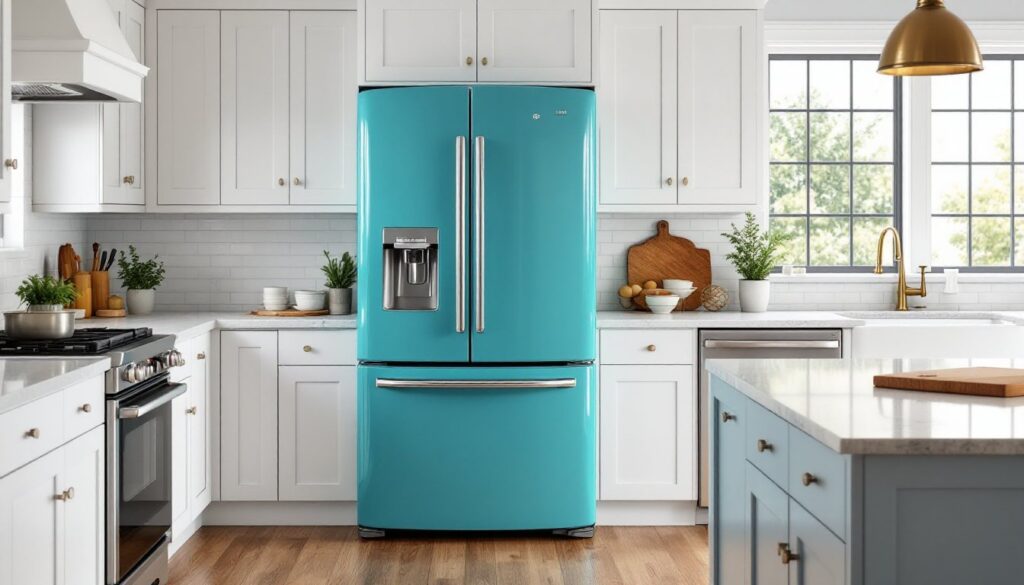
Big Chill’s main selling point is its color and finish library. The company offers over 200 custom powder-coat colors, from classic pastels like buttercream yellow and turquoise to bold modern shades like cobalt blue and graphite. If you’re matching existing cabinetry or tile work, you can provide a paint code or sample, and Big Chill will match it, though this adds to lead time and cost.
Standard finishes include glossy, textured, and satin. Glossy finishes deliver that classic 1950s chrome-trimmed look but show fingerprints and smudges more readily, especially in high-traffic kitchens. Textured finishes hide minor scuffs better and suit households with kids or pets. Satin splits the difference, offering a low-sheen surface that’s easier to maintain than high-gloss but more refined than textured.
Hardware options include chrome, brushed nickel, and brass handles and trim. Chrome is the most authentic vintage choice, but brushed nickel and brass work better in transitional or farmhouse-style kitchens. All hardware is solid metal, not plastic with a metallic finish, which holds up better over time.
For kitchen design projects where every detail counts, Big Chill also offers custom logos or graphics applied to the door panels. This option is popular for commercial spaces, branded showrooms, or homeowners who want a one-of-a-kind piece.
Keep in mind that custom colors and finishes extend the lead time to 12–16 weeks from order to delivery. If you’re on a tight renovation schedule, standard colors (usually white, black, red, and a few pastels) ship faster, typically within 6–8 weeks. Plan your project timeline accordingly, don’t demo your old fridge until the new one is confirmed in transit.
Pricing and Value Considerations
Big Chill refrigerators start around $3,500 for the Retro Compact and climb to $5,000–$7,000 for full-size models with custom colors and finishes. Pro Line counter-depth units can exceed $8,000, depending on configuration and options. That’s significantly higher than a standard top-freezer refrigerator from a major appliance brand, which typically runs $800–$1,500.
The price reflects both the custom nature of the product and the niche market. You’re not paying for cutting-edge cooling technology or massive capacity, you’re paying for design, finish quality, and the ability to specify exactly what you want. If your kitchen renovation includes custom cabinetry, high-end tile work, or period-accurate lighting, a Big Chill refrigerator fits the same category: it’s a design choice, not a utility purchase.
Resale value is hard to predict. In markets where mid-century modern design is popular, a well-maintained Big Chill unit can be a selling point. In areas where buyers prioritize stainless steel and smart features, it might be seen as quirky or limiting. If you’re flipping a property, stick with safer appliance choices. If you’re building a forever home or a passion project, the investment makes more sense.
Warranty coverage is one year parts and labor, with an additional four years on the sealed refrigeration system (compressor, condenser, evaporator). That’s standard for residential appliances. Extended warranties are available through some retailers but read the fine print, many exclude cosmetic damage, which is the most common issue with powder-coated finishes.
For budgeting purposes, factor in delivery and installation costs, which can add $200–$500 depending on your location and whether stairs, narrow doorways, or other obstacles are involved.
Installation Tips for Your Big Chill Refrigerator
Installing a Big Chill refrigerator is straightforward if you’re replacing a similar-sized unit, but there are a few considerations specific to these appliances.
Measure twice, order once. Verify the height, width, and depth of your available space, including door swing clearance and ventilation gaps. Big Chill recommends 1 inch of clearance on the top and sides and 2 inches on the back for airflow. If you’re tight on space, a counter-depth Pro Line model might be necessary.
Check your doorways and hallways. These units ship fully assembled, and the Original Size model is bulky. Measure door frames, stairwell widths, and any tight turns between your delivery point and the kitchen. If clearances are under 32 inches, you may need to remove door trim or hinges temporarily. Refrigerator dollies and furniture sliders help, but having a second person is non-negotiable, these units weigh 250–350 pounds depending on model.
Plan your electrical connection. Big Chill refrigerators use a standard 115V, 60Hz, 15-amp circuit. Most kitchens already have a dedicated outlet behind the appliance space, but verify that it’s GFCI-protected if required by local code (newer NEC editions require GFCI protection for kitchen receptacles within 6 feet of a sink). Don’t use an extension cord, it’s a fire hazard and voids the warranty.
Level the unit. Once in place, adjust the front leveling legs so the fridge tilts slightly back (about 1/4 inch over the depth of the unit). This ensures the door closes fully under its own weight and prevents the unit from walking forward during compressor cycles. Use a torpedo level on the top surface to check both front-to-back and side-to-side alignment.
Allow the refrigerant to settle. After delivery, let the unit sit upright and unplugged for 4–6 hours before turning it on. This gives the compressor oil time to drain back into the system, which prevents startup damage. Once powered, wait 24 hours before loading it with food, initial cooldown takes time, and opening the door repeatedly during this period extends the process.
If you’re installing in a tight alcove or between cabinets, consider whether you’ll need to remove the unit for future repairs. Compressor replacement or door hinge repair might require pulling the fridge out, so don’t box it in so tightly that you’d need to disassemble cabinetry to service it.
Safety note: Always wear steel-toe boots and work gloves when moving heavy appliances. Pinched fingers and dropped corners cause more ER visits than any power tool. If the unit needs to go up or down stairs, hire professional movers, it’s worth the $150–$300 to avoid injury or cosmetic damage to a $5,000+ appliance.
For appliance reviews and installation guidance, most major home publications provide step-by-step walkthroughs and troubleshooting tips that apply across brands.
Conclusion
Big Chill refrigerators deliver a specific aesthetic that mass-market appliances can’t match, but they require planning, patience, and a realistic budget. If your kitchen design prioritizes vintage character and you’re comfortable with custom lead times, they’re a solid choice. Measure carefully, plan for professional delivery if needed, and treat the installation like any other major appliance swap, methodical prep work prevents headaches later.