Table of Contents
ToggleBamboo kitchen cabinets are gaining serious traction among homeowners who want durability, sustainability, and a clean aesthetic without the premium price tag of hardwoods. This grass, yes, grass, grows to maturity in just 3–5 years, making it one of the most renewable cabinet materials available. Unlike traditional hardwoods that take decades to replenish, bamboo regenerates quickly without replanting. But sustainability doesn’t mean compromise. Bamboo rivals oak and maple in hardness, resists moisture better than many woods, and accepts stains and finishes like a champ. Whether planning a full kitchen remodel or a cabinet refresh, understanding bamboo’s properties, costs, and quirks can help homeowners make a decision that lasts.
Key Takeaways
- Bamboo kitchen cabinets offer superior hardness and moisture resistance at $100–$250 per linear foot, making them an affordable alternative to premium hardwoods while providing exceptional durability.
- Bamboo grows to maturity in just 3–5 years compared to 30–50 years for traditional hardwoods, making it one of the most environmentally sustainable cabinet materials when FSC-certified.
- Strand-woven bamboo rates around 3,000 on the Janka hardness scale, significantly harder than red oak or hard maple, and resists scratches and dents better than softer woods.
- Proper acclimation, sealing with water-based polyurethane, and moisture control between 35–55% humidity are essential for ensuring bamboo cabinets maintain their appearance and durability for 20–30 years.
- Natural blonde bamboo works beautifully in modern, Scandinavian-inspired kitchens, while caramelized bamboo delivers warmth for transitional designs and pairs well with Shaker-style cabinet doors.
- Quality variation exists among suppliers, so always verify low-VOC certifications, adhesive standards, and responsible sourcing to avoid formaldehyde off-gassing and delamination issues.
What Makes Bamboo an Ideal Material for Kitchen Cabinets?
Bamboo isn’t a tree. It’s a fast-growing grass with a dense cellular structure that rivals hardwood in strength. When processed for cabinetry, bamboo culms are sliced, boiled, and laminated into panels or plywood that can be milled like traditional lumber.
Hardness is a key advantage. Strand-woven bamboo, where shredded fibers are compressed under extreme pressure, rates around 3,000 on the Janka hardness scale, significantly harder than red oak (1,290) or hard maple (1,450). This makes bamboo cabinets highly resistant to dents, scratches, and daily wear.
Moisture resistance is another win for kitchens. Bamboo’s natural silica content helps repel water, reducing the risk of warping or swelling in humid environments. That said, it’s not waterproof, spills should still be wiped promptly, and proper sealing is essential.
Sustainability is bamboo’s headline feature. Mature bamboo can be harvested in 3–5 years, and the root system remains intact, allowing continuous regrowth without replanting. Compare that to oak or cherry, which require 30–50 years to mature. Bamboo also absorbs more CO₂ and releases more oxygen than most tree species, making it a carbon-negative material when responsibly sourced.
Workability is solid. Bamboo accepts screws, glues, and edge banding without excessive chipping, though carbide-tipped blades are recommended due to its density. It takes stain well, though natural blonde bamboo often needs a wood conditioner first to prevent blotchiness. Those familiar with woodworking project plans will appreciate bamboo’s predictable grain and minimal tear-out when properly milled.
Pros and Cons of Bamboo Kitchen Cabinets
Advantages of Choosing Bamboo
Eco-friendliness tops the list. Bamboo’s rapid growth cycle and minimal environmental footprint appeal to homeowners prioritizing green building materials. Look for FSC-certified (Forest Stewardship Council) bamboo to ensure responsible harvesting practices.
Durability rivals or exceeds many hardwoods. Strand-woven bamboo, in particular, holds up to heavy use without showing wear. It resists scratches, dents, and daily impacts better than softer woods like pine or birch.
Moisture tolerance makes bamboo suitable for kitchens where humidity and occasional splashes are inevitable. Proper sealing with polyurethane or water-based finishes enhances this natural resistance.
Affordability sits between budget laminates and premium hardwoods. Expect to pay $100–$250 per linear foot installed for bamboo cabinets, compared to $150–$400+ for solid hardwood options. Material-only costs for bamboo plywood run around $2–$5 per square foot, making DIY builds more accessible.
Aesthetic versatility is underrated. Natural blonde bamboo offers a light, modern look, while caramelized bamboo (heat-treated to darken the color) delivers warmth without stain. Both accept finishes well, allowing customization to match existing decor.
Potential Drawbacks to Consider
Quality variation is real. Not all bamboo is created equal. Cheap, non-certified bamboo may contain formaldehyde-based adhesives or inconsistent lamination, leading to delamination or off-gassing. Always verify low-VOC (volatile organic compound) certifications and adhesive standards.
Scratch visibility can be more pronounced on natural blonde bamboo. While the material itself resists scratches, lighter finishes show marks more readily than darker stains. Caramelized bamboo hides wear better.
Limited style options compared to traditional woods. Bamboo’s linear grain doesn’t replicate the cathedral patterns of oak or the rich figuring of walnut. Homeowners seeking ornate, traditional cabinetry may find bamboo’s clean lines too minimalist.
Manufacturing matters. Bamboo harvested and processed in regions with lax environmental standards may involve chemical treatments or unsustainable practices. Stick with suppliers offering transparency about sourcing and certifications.
Bamboo Cabinet Styles and Finishes for Your Kitchen
Bamboo adapts to multiple design aesthetics, though it shines brightest in contemporary and transitional spaces.
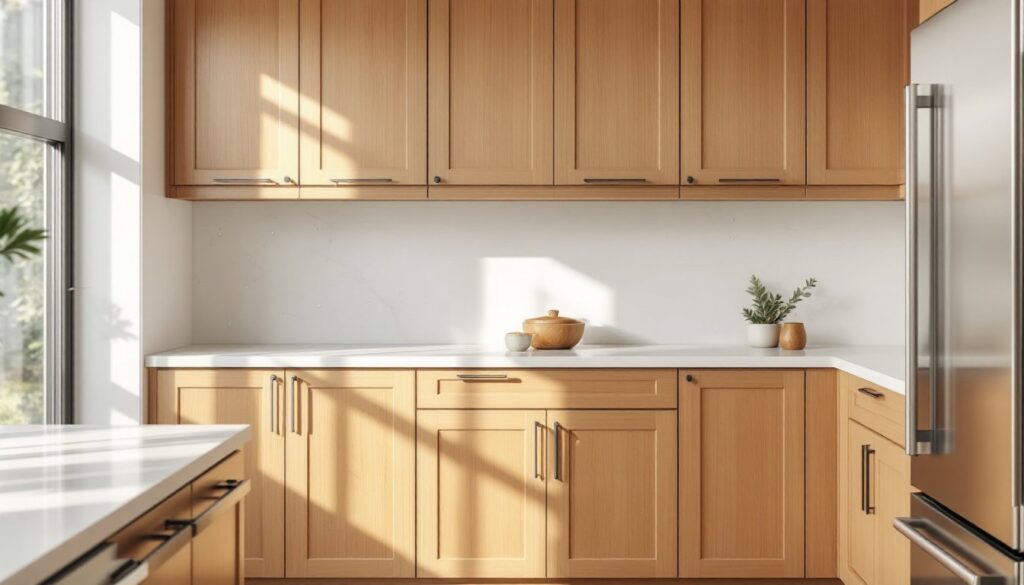
Shaker-style doors are the most popular bamboo cabinet format. Clean lines, recessed center panels, and minimal detailing let the material’s natural grain take center stage. Flat-panel (slab) doors work equally well for ultra-modern kitchens.
Natural blonde bamboo delivers a Scandinavian-inspired, airy feel. Pair it with white countertops, stainless appliances, and matte black hardware for contrast. This finish works beautifully in small kitchens where light tones help maximize perceived space, something covered extensively on sites like The Kitchn.
Caramelized bamboo offers warmth without stain. The heat-treatment process caramelizes the sugars in bamboo, producing amber to honey tones. This finish complements butcher block countertops, brass fixtures, and warm-toned backsplashes.
Stained bamboo expands color possibilities. Gray, espresso, and walnut stains are trending in 2026. Apply a wood conditioner first, bamboo’s dense grain can absorb stain unevenly without it. Test on scrap pieces to dial in the desired tone.
Two-tone designs leverage bamboo’s affordability. Use natural bamboo for upper cabinets and a darker stain or contrasting material for lowers. This adds visual interest without breaking the budget.
Hardware selection matters. Bamboo’s clean grain pairs well with simple bar pulls, cup pulls, or even handleless designs with push-to-open mechanisms. Avoid overly ornate hardware that competes with the material’s linear aesthetic.
Edge profiles should stay minimal. Bamboo’s density makes intricate router work challenging, and simpler edges (square, micro-bevel) suit the material’s modern vibe better than decorative ogees or coves.
Installation and Maintenance Tips for Bamboo Cabinets
Installing bamboo cabinets follows the same principles as traditional cabinetry, but a few material-specific considerations apply.
Acclimation is non-negotiable. Store bamboo cabinet boxes in the installation space for 48–72 hours before mounting. This lets the material adjust to ambient humidity, minimizing post-installation movement.
Wall prep matters. Locate studs with a stud finder and mark them clearly. Bamboo cabinets, like all cabinetry, must anchor into solid framing, drywall anchors alone won’t support the weight. Use 2½-inch cabinet screws driven into studs for upper cabinets.
Leveling is critical. Start with a level reference line around the kitchen. Upper cabinets should align perfectly: even a ⅛-inch deviation becomes obvious across a long run. Use shims behind cabinets to true them up before final fastening.
Assembly tips: Pre-drill all screw holes to prevent splitting, especially near edges. Bamboo’s density can cause screws to bind or crack the material without pilot holes. Apply painter’s tape to finished surfaces before drilling to prevent chipping.
Sealing and finishing: If cabinets arrive unfinished, apply 3 coats of water-based polyurethane or a penetrating oil finish. Sand lightly (220-grit) between coats. Water-based finishes preserve bamboo’s natural color: oil-based finishes add an amber tone.
Daily maintenance is straightforward. Wipe spills immediately with a damp cloth. Use mild dish soap for sticky residues, avoid ammonia-based cleaners or abrasive sponges that dull the finish.
Deep cleaning: Every few months, clean cabinets with a 50/50 solution of white vinegar and water, then wipe dry. This removes grease buildup without damaging the finish.
Resealing: Expect to reapply finish every 3–5 years in high-traffic kitchens. Sand lightly (320-grit), clean thoroughly, and apply a fresh topcoat. This restores water resistance and refreshes appearance.
Humidity control: Maintain indoor humidity between 35–55%. Extreme dryness can cause bamboo to shrink: excessive moisture can lead to swelling. A whole-house humidifier or dehumidifier helps in climates with seasonal extremes.
Cost Comparison: Bamboo vs. Traditional Cabinet Materials
Bamboo sits in a sweet spot between budget and premium materials. Here’s how it stacks up (prices reflect 2026 market averages and vary by region, material grade, and supplier):
Bamboo cabinets: $100–$250 per linear foot installed. DIY-friendly bamboo plywood runs $2–$5 per square foot, making custom builds feasible for handy homeowners following plans from sources like Ana White.
Stock particleboard/MDF cabinets with laminate: $60–$150 per linear foot. Cheapest upfront, but less durable and prone to moisture damage.
Plywood cabinets (birch or maple veneer): $150–$300 per linear foot. Comparable durability to bamboo but less eco-friendly.
Solid hardwood cabinets (oak, maple, cherry): $200–$500+ per linear foot. Premium aesthetics and longevity, but significantly higher cost and environmental impact.
High-end options (walnut, custom inset): $500–$1,200+ per linear foot. Reserved for luxury remodels.
Material-only comparison for a standard 10×10 kitchen (30 linear feet of cabinetry):
- Bamboo: $3,000–$7,500 installed
- Particleboard/laminate: $1,800–$4,500
- Plywood veneer: $4,500–$9,000
- Solid hardwood: $6,000–$15,000+
Longevity factors: Bamboo’s durability means lower replacement costs over time compared to particleboard, which may need replacing in 10–15 years. Properly maintained bamboo cabinets can last 20–30 years.
DIY savings: Homeowners comfortable with cabinet assembly can save 40–50% by purchasing unfinished bamboo plywood and building their own boxes. A basic setup requires a table saw, drill, pocket-hole jig, and clamps, tools many DIYers already own.
Hidden costs: Factor in hardware ($3–$15 per pull/knob), hinges ($2–$8 per pair for soft-close European hinges), and finish materials ($40–$80 per gallon for quality polyurethane). Professional installation adds $50–$100 per linear foot if going the turnkey route.
Bamboo delivers the best value for homeowners wanting sustainable, durable cabinets without hardwood pricing. The material performs well in kitchens, holds up to daily use, and offers enough style flexibility to suit modern and transitional designs. Just vet suppliers carefully, prioritize certified materials, and don’t skip the prep work, acclimation and proper sealing make all the difference between cabinets that last decades and ones that disappoint.