Table of Contents
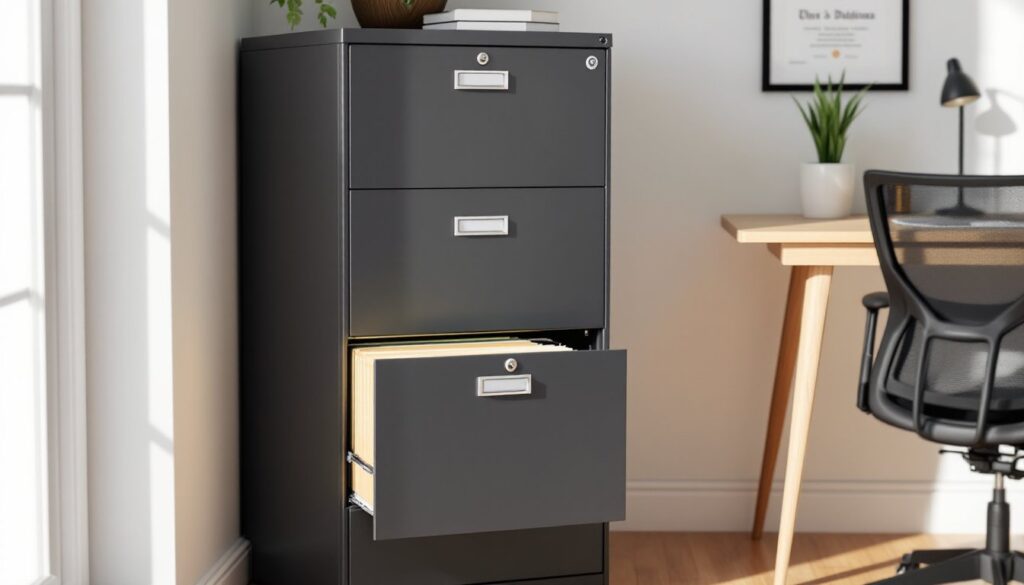
ToggleA dedicated filing system transforms a cluttered home office into a functional workspace, and a 4 drawer filing cabinet sits at the heart of that transformation. Unlike shallow two-drawer models that overflow quickly or sprawling lateral systems that hog floor space, the four-drawer vertical cabinet strikes a practical balance. It holds letter- and legal-size documents, accommodates hanging folders without modification, and typically stands around 52 inches tall, tucking neatly into corners or alongside desks. Whether sorting tax records, manuals, or family paperwork, the right filing cabinet 4 drawer setup keeps essentials accessible without commandeering half the room.
Key Takeaways
- A 4 drawer filing cabinet stores 2,000–2,400 sheets of documents, providing enough capacity for seven years of tax records and household files without overwhelming your home office footprint.
- Vertical cabinets occupy just 15 by 26 inches of floor space, making them ideal for tight spaces, while lateral models sacrifice footprint but offer wider access and can function as room dividers in open offices.
- Quality hardware matters: prioritize ball-bearing full-extension slides, cam locks, and drawers rated for 25–30 pounds to ensure smooth operation and document security over time.
- Metal cabinets offer superior durability and fireproofing with powder-coat finishes, while wood models ($400–$900) blend into traditional offices but require dry environments to prevent swelling.
- Organize your filing cabinet by access frequency—active files on top, semi-archived material in the middle, and long-term storage below—and install anti-tip brackets to prevent tipping when multiple drawers open simultaneously.
- A well-maintained filing cabinet requires a purge schedule every six months to remove expired documents, keeping retrieval times under 30 seconds and preventing drawer overflow.
Why a 4 Drawer Filing Cabinet Is the Perfect Home Office Solution
Four drawers deliver around 2,000 to 2,400 sheets of storage when filled with standard hanging file folders, enough capacity for seven years of tax documentation plus ongoing household files. That depth matters for homeowners managing mortgage paperwork, insurance policies, warranties, and school records without resorting to cardboard boxes in the garage.
Vertical 4 drawer filing cabinets occupy roughly 15 by 26 inches of floor space (footprint varies slightly by manufacturer), leaving room for chairs to slide past and doors to swing clear. The height works in your favor: top drawers sit at comfortable standing reach, while bottom drawers handle archived material you reference less frequently.
Stability is another advantage. Quality cabinets include counterbalance weights or interlocking mechanisms that prevent tip-overs when multiple drawers open simultaneously, a safety feature essential in homes with kids or pets. Look for models rated to hold 25 to 30 pounds per drawer: heavier-gauge steel frames support that load without sagging rails or jamming slides.
Locking cylinders secure all four drawers with a single key, meeting both privacy needs and homeowner insurance requirements for document protection. Many policies stipulate secure storage for deeds, titles, and financial records: a locking filing cabinet 4 drawer unit satisfies that clause without investing in a separate safe.
Types of 4 Drawer Filing Cabinets: Which One Fits Your Space?
Vertical vs. Lateral Filing Cabinets
Vertical cabinets arrange files front-to-back, with drawers typically 26 to 28 inches deep to accommodate legal-size folders. They’re the go-to choice for tight spaces, home offices carved from closets, basement corners, or garage workstations. The narrow width (usually 15 inches) means they fit alongside bookshelves or under windows without blocking pathways.
Lateral models run files side-to-side across wider drawers, often 30 to 42 inches wide. They function double-duty as credenzas or room dividers, and the shallower drawer depth (16 to 18 inches) makes it easier to scan file tabs at a glance. But that width eats floor space quickly: measure doorways and clearance zones before committing. Lateral cabinets suit open-plan offices or shared workspaces where multiple users need simultaneous access.
For most home offices, vertical wins on footprint alone. If you’re converting a spare bedroom or carving out desk space in a finished attic, those extra inches matter.
Material Choices: Metal, Wood, and Modern Alternatives
Metal cabinets, typically 20- to 22-gauge steel, offer fireproofing (look for UL Class 350 one-hour ratings) and durability. Powder-coat finishes resist scratches better than paint: black, putty, and charcoal remain standard, though some manufacturers now offer slate blue or sage green. Metal handles moisture better than wood, making it the smart pick for basements or garage offices prone to humidity swings.
Expect metal units to weigh 100 to 150 pounds empty: factor in assistance or a dolly for delivery day. Ball-bearing slides in quality models glide smoothly even when loaded, while cheaper stamped-steel tracks bind under weight.
Wood cabinets, oak, cherry, or engineered veneers, blend into traditional home offices and living spaces. They’re quieter to operate (no metallic clang when drawers close) and can be stained or painted to match trim. Dovetail joinery and full-extension slides signal quality construction. Drawback: wood swells in damp environments, and most lack fire ratings. Plan on $400 to $900 for solid-wood models versus $150 to $400 for comparable steel.
Modern alternatives include laminate-over-particleboard (budget-friendly but prone to chipping) and high-density polyethylene composites (lightweight, rust-proof, but limited weight capacity). Laminate works for low-use spaces, craft rooms, seasonal storage, but won’t survive daily opening and closing over years. Composites suit mobile setups or temporary offices: just confirm drawer ratings before loading heavy binders.
How to Choose the Right 4 Drawer Filing Cabinet for Your Needs
Start with drawer dimensions. Letter-size drawers measure approximately 12.5 inches wide internally: legal-size stretch to 15.5 inches. If you store mostly standard 8.5-by-11-inch documents, letter width saves money and space. Legal width future-proofs the cabinet for architectural plans, property surveys, or oversized tax forms.
Check slide mechanisms before buying. Ball-bearing full-extension slides let drawers open completely, exposing the back of the file without awkward reaching. Cheaper friction slides stop three-quarters out and wear faster under load. Open and close floor models in-store: smooth operation with no binding or wobble indicates quality hardware.
Lock type matters for document security. Cam locks (the small round keyhole) secure all drawers with a 90-degree turn: they’re adequate for general privacy. Plunger locks (push-button releases) work well in shared spaces where multiple users need quick access. For sensitive records, medical files, legal contracts, consider a cabinet with a high-security tubular lock and reinforced drawer fronts.
Weight capacity often gets overlooked. A drawer rated for 25 pounds holds roughly 500 sheets of paper plus hanging hardware: 30-pound ratings accommodate binders and reference books. Multiply by four drawers to estimate total load, then confirm the cabinet’s base can support it without tipping. Anti-tip brackets (included with most metal models) anchor the unit to wall studs, a must-install if the cabinet sits in a high-traffic area or home with children.
Finish durability extends lifespan. Powder-coated steel resists chips better than spray paint: test a corner with your fingernail to check adhesion. Wood veneers should feel smooth with tight seams: bubbling or peeling signals poor bonding. For environments with modern design priorities, look for cabinets with concealed hardware, flush drawer fronts, or matte finishes that complement contemporary furniture.
Budget $200 to $500 for a reliable metal cabinet with ball-bearing slides and a cam lock. Wood models start around $400: solid hardwood with dovetail construction runs $700-plus. Used office-furniture dealers often stock commercial-grade steel cabinets for $75 to $150, test locks and slides carefully, but the savings can fund better desk chairs or lighting.
Smart Organization Strategies for Your 4 Drawer Filing Cabinet
Assign each drawer a category tier based on access frequency. Top drawer: active projects, current-year taxes, pending invoices. Second drawer: reference documents, manuals, warranties, insurance policies. Third drawer: semi-archived material, prior-year taxes (keep seven years per IRS guidelines), completed project files. Bottom drawer: long-term storage, property records, vehicle titles, estate documents.
Use hanging file folders with built-in rails rather than friction-fit frames: they’re sturdier and adjust to letter or legal width without tools. Label folders with a label maker or printed tabs, handwriting fades and becomes illegible over time. Color-coding works for visual processors: green for financial, blue for household, red for medical.
File vertically, not in stacks. Stand folders upright so tabs remain visible: when files pile horizontally, retrieval turns into an archaeological dig. Keep folders one-third full, overstuffed folders jam drawers and tear at the creases.
Carry out a purge schedule. Mark a calendar reminder every six months to cull outdated documents. Shred expired insurance statements, old utility bills (keep one year for warranty purposes), and superseded contracts. Homes managing organization systems find that regular maintenance prevents drawer overflow and keeps retrieval times under 30 seconds.
For mixed media, dedicate one drawer to non-paper storage: external hard drives in padded cases, USB sticks in labeled organizer trays, or CD/DVD binders (yes, some of us still burn backups). Drawer dividers, plastic or metal inserts, partition space for small items like checkbooks, stamps, or notary supplies.
Safety tip: Never open more than one drawer at a time on a four-drawer cabinet, especially upper drawers. The weight shift can tip an unanchored unit forward. If the cabinet didn’t include an anti-tip bracket, buy a furniture anchor kit (under $10 at hardware stores) and lag-bolt it to a wall stud. Use a stud finder to locate solid backing, drywall anchors alone won’t hold tipping force.
Keep the bottom drawer lightest if the cabinet lacks counterbalance weights. Store bulky but lightweight items, empty binders, poster tubes, rolled plans, down low to maintain a low center of gravity.
Conclusion
A well-chosen filing cabinet 4 drawer setup ends the cycle of misplaced receipts and frantic document searches. Match the cabinet type to your space constraints, prioritize slide quality and lock security over cosmetic details, and anchor the unit properly before loading. Organize by access frequency, label clearly, and schedule regular purges. Done right, that steel or wood box becomes the most reliable piece of furniture in the home office.