Table of Contents
ToggleFinding the right refrigerator for a compact kitchen can feel like squaring a circle, especially when standard 70-inch models tower above your cabinets or crowd your overhead clearance. A 68-inch tall refrigerator offers a practical middle ground, delivering full-size cooling capacity without the installation headaches. These models fit snugly under standard 84-inch ceilings with room for ventilation, slide into tighter alcoves, and simplify delivery through narrow doorways. Whether renovating a galley kitchen, outfitting a basement apartment, or working around low soffits, this size solves real-world clearance problems without sacrificing storage or features.
Key Takeaways
- A 68-inch tall refrigerator fits comfortably under standard 84-inch ceilings with proper ventilation clearance, making it ideal for kitchens with soffits, low ceilings, or tight alcoves that wouldn’t accommodate standard 70-inch models.
- Storage capacity isn’t compromised in a 68-inch tall refrigerator—models typically offer 18–22 cubic feet of space, with wider widths (32–36 inches) compensating for the reduced height while maximizing usable storage for households of 3–4 people.
- French-door and bottom-freezer configurations at 68 inches provide better ergonomics and are perfect for compact kitchens, as their narrow door swing prevents collisions in galley layouts and puts frequently accessed fresh food at chest height.
- ENERGY STAR® certified 68-inch refrigerators use at least 10% less energy than federal minimums, saving $200–$300 over a 12-year lifespan, while inverter compressors offer quieter operation and better temperature control.
- Accurate measurements of height, width, and depth—plus tracing the delivery path—are critical before purchase, as a 68-inch tall refrigerator must have at least 1 inch of top clearance and fit through doorways without removing door panels.
- Allow a newly delivered refrigerator to stand upright for 4 hours before powering it on, and use braided stainless steel supply lines for ice makers, as these steps prevent compressor damage and ensure proper installation.
Why 68-Inch Refrigerators Are Ideal for Compact Kitchen Layouts
Most stock kitchens are designed around a standard ceiling height of 84 inches (7 feet). Subtract the typical 36-inch base cabinet and a 30-inch upper cabinet, and you’re left with roughly 18 inches of clearance for a fridge, plus the mandatory 1–2 inches of air gap at the top for heat dissipation. A 68-inch fridge sits comfortably in that envelope, leaving breathing room for the compressor and preventing overheating.
This height also accommodates kitchens with low soffits or bulkheads, those boxed-in frames that run above cabinets to hide ductwork or wiring. In older homes or condos, soffits often drop ceiling clearance to 78–80 inches. A standard 70-inch fridge would jam against the soffit or require custom cabinet modifications. A 68-inch model slides in cleanly, no reciprocating saw needed.
Delivery and installation become simpler, too. Refrigerators ship with their doors attached, and a 68-inch unit clears most 32-inch interior doorways without tipping or removing door slabs. If you’re hauling it down a basement stairwell or through a narrow galley, every inch matters. The slightly shorter profile also reduces hinge stress during pivoting, which is critical for side-by-side and French-door models with wide swing arcs.
For renters or DIYers working in tight quarters, this size offers flexibility. You won’t need to negotiate with a landlord about cabinet removal, and you can often install it as a plug-and-play upgrade without calling in a handyman. Just verify your existing outlet is a dedicated 15- or 20-amp circuit, most fridges draw 6–8 amps, but startup surge can spike higher.
Key Features to Look for in a 68-Inch Tall Refrigerator
Storage Capacity and Interior Organization
Don’t assume a shorter fridge means sacrificing storage. Many 68-inch models pack 18–22 cubic feet of capacity, enough for a household of 3–4 people, by maximizing width and depth. Look for units that are 32–36 inches wide: the extra horizontal real estate compensates for lost vertical space.
Adjustable shelving is non-negotiable. Tempered glass shelves with sliding or flip-up sections let you accommodate tall pitchers, sheet cakes, or party platters without rearranging the entire fridge. Spill-proof edges (raised lips) contain messes and make cleanup faster.
Drawer configuration matters more than you’d think. Full-width crisper drawers with humidity controls keep produce fresh longer, set one to high humidity for leafy greens, the other to low for fruits and peppers. Some models add a third drawer for deli meats or cheeses, which is clutch if you meal-prep or pack lunches daily.
Door bins should be deep enough for gallon jugs and adjustable in height. Flimsy, fixed bins are a recipe for frustration when you’re trying to fit a tall bottle of olive oil or a wine bottle. Check if the door shelves are modular: being able to pop one out for cleaning or rearrange them seasonally is a small luxury that pays off.
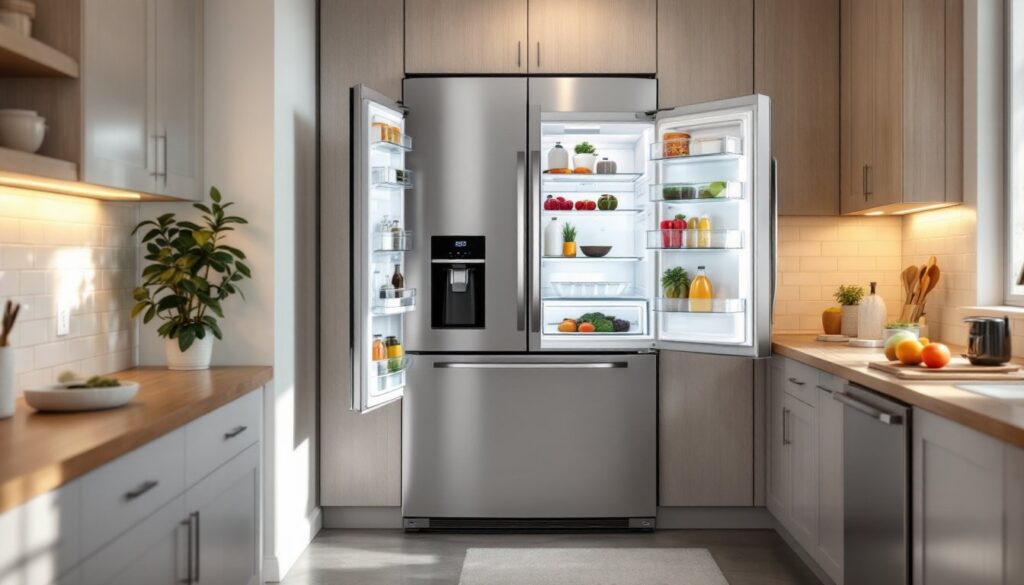
Freezer layout varies by style. Top-freezer models give you more usable fridge space below, but you’ll crouch to access lower shelves. Bottom-freezer units put fresh food at eye level, which is ergonomically smarter if you open the fridge more than the freezer. French-door models, popular among those researching French-door refrigerator options, split the fridge into two narrow doors, minimizing cold air loss and fitting better in tight galley kitchens where a single wide door would block traffic.
Energy Efficiency and Smart Technology Options
A refrigerator runs 24/7, so energy costs add up. Look for the ENERGY STAR® certification, which means the unit uses at least 10% less energy than federal minimums. Over a 12-year lifespan, that can save $200–$300 on your electric bill, depending on local rates.
Inverter compressors are quieter and more efficient than traditional on/off models. They modulate cooling output instead of cycling full-blast, reducing temperature swings and compressor wear. If your kitchen is open to the living area or you’re sensitive to hum, this upgrade is worth it.
Smart features are no longer luxury-only. Mid-range 68-inch models now offer Wi-Fi connectivity, letting you adjust temperatures remotely, receive door-ajar alerts, or run diagnostics through an app. Some integrate with Alexa or Google Assistant for voice control, handy if your hands are covered in flour and you need to check the fridge temp without touching the panel. Those interested in smart home integration will appreciate models with built-in cameras that snap photos of shelves every time you close the door, so you can check what’s inside while grocery shopping.
LED lighting is standard now, but placement varies. Look for multi-level LED strips that illuminate the back corners of shelves and crisper drawers. Poorly lit fridges lead to forgotten leftovers and wasted food.
Sabbath mode is a niche but important feature for observant households. It disables lights, alarms, and automatic defrost cycles during religious observances. If that’s relevant, verify the feature before buying, not all brands include it.
Top Styles and Configurations Available in 68-Inch Models
Top-freezer refrigerators are the most budget-friendly and energy-efficient style. They typically range from $600–$1,200 and offer the most fridge capacity per cubic foot. The downside? You’ll bend or kneel to reach bottom shelves, and the freezer is at eye level, great if you’re stocking frozen pizzas, less ideal if you prioritize fresh produce access. Brands like Frigidaire, GE, and Whirlpool dominate this category.
Bottom-freezer models flip the script, putting fresh food at chest height. Expect to pay $900–$1,800. The freezer is usually a pull-out drawer, which makes organization easier than a top-freezer’s stacked shelves. These work well in households that cook from scratch and access the fridge more frequently. LG and Samsung offer reliable options in the 68-inch range.
French-door refrigerators combine a bottom freezer with double doors on top. They’re the priciest at $1,500–$3,000+ but offer the best ergonomics and style. The narrow door swing is a lifesaver in galley kitchens or islands-adjacent layouts where a full-width door would collide with counters. Many include a middle drawer for quick-access items like juice boxes or snacks. This style is popular in modern kitchen designs, and those renovating often consult resources like The Kitchn for layout inspiration.
Side-by-side models split the fridge and freezer vertically. They’re less common in the 68-inch height but still available. The advantage is narrow door clearance and eye-level access to both compartments. The trade-off? Shelf width is limited, fitting a sheet pan or pizza box can be awkward. These suit households that use frozen and fresh items equally.
Counter-depth variants are worth mentioning. Standard refrigerators protrude 30–34 inches from the wall: counter-depth models sit flush with cabinets at 24–27 inches deep for a built-in look. You’ll sacrifice 2–3 cubic feet of capacity, but the streamlined appearance can make a small kitchen feel larger. If you’re doing a full remodel, pairing a counter-depth 68-inch fridge with open shelving or shallower uppers creates a cohesive, uncluttered look.
Some manufacturers also produce 67-inch models, just an inch shorter, if your ceiling clearance is especially tight. If you’re wondering who makes a 67 inch tall refrigerator, brands like Bosch, KitchenAid, and Frigidaire offer select models in this slightly shorter range, typically in European-style or apartment-size configurations.
Installation Tips and Measuring Your Kitchen Space
Measure three times, order once. Start by recording the height, width, and depth of your existing fridge alcove. Use a tape measure, not a laser measure, which can bounce off textured walls, and note the smallest dimension if the space is uneven.
For height, measure from the floor to the underside of any cabinets, soffits, or ductwork. Add 1 inch minimum for ventilation clearance at the top: 2 inches is better. If you’re between sizes, go shorter. A fridge that’s too tall will overheat and void your warranty.
Width should include 1/2 inch of clearance on each side for doors to swing freely and air to circulate. If your alcove is exactly 36 inches wide, a 36-inch fridge won’t fit, you need a 35-inch model. Check the hinge side, too. Most doors are reversible, but confirm before delivery. If the door swing would block your work triangle, you’ll need to flip it or choose a different style.
Depth is tricky. Measure from the back wall to the front edge of your countertops. Standard fridges are 30–34 inches deep, but baseboards, outlets, and water lines can steal space. If your outlet sits 2 inches off the wall, account for that. You may need a recessed outlet box or an offset plug adapter to avoid pushing the fridge forward.
Trace the delivery path before the truck arrives. Measure doorways, hallways, and stairwells. Most interior doors are 32 inches wide, but older homes can be narrower. Remove door stops or hinge pins if needed, don’t muscle the fridge through and risk gouging the jamb.
Check the floor level. If your kitchen has a slight slope (common in older homes), the fridge may rock or the doors may swing open. Most units have adjustable front leveling legs, turn them clockwise to raise, counterclockwise to lower. Use a torpedo level on top of the fridge and aim for level side-to-side and a slight backward tilt (1/4 inch over 24 inches) so doors self-close.
If you’re replacing an old fridge, shut off the water line (for ice makers) at the saddle valve or compression fitting under the sink. Have a bucket and towels ready, lines can dribble even after shutoff. When connecting the new unit, use a braided stainless steel supply line instead of plastic or copper. They’re code-compliant in most jurisdictions, resist kinking, and are easier to install for DIYers. Tighten fittings hand-tight, then add 1/4 turn with a wrench, overtightening cracks fittings.
Allow the fridge to stand upright for 4 hours before plugging it in if it was transported on its side. This lets compressor oil settle back into the pump. Skipping this step can damage the compressor and void warranties. Set the fridge temp to 37°F and the freezer to 0°F. It’ll take 24 hours to reach stable temps, so don’t load perishables immediately.
Conclusion
A 68-inch tall refrigerator solves the clearance puzzle without compromise. It fits under standard ceilings, navigates tight doorways, and delivers the capacity most households need, all while simplifying installation. Measure carefully, choose features that match your workflow, and don’t skip the prep work. Get those steps right, and you’ll have a fridge that works as hard as you do.