
Table of Contents
ToggleA dated fireplace can drag down an entire room, but a well-executed remodel can turn it into the home’s focal point. The best part? Many fireplace transformations don’t require structural changes or five-figure budgets. From covering worn brick with sleek tile to swapping a bulky mantel for floating shelves, these before-and-after projects prove that dramatic results often come from surface-level updates. Whether you’re drawn to minimalist cement board finishes or warm shiplap surrounds, the right materials and execution can completely reshape how a space feels, without moving a single stud.
Key Takeaways
- A before and after fireplace remodel can transform a room’s focal point for $500–$3,000 with mostly cosmetic updates, avoiding expensive structural changes.
- Modern minimalist and rustic farmhouse styles dominate 2026 fireplace trends, using large-format tile, shiplap, and stacked stone veneer for dramatic visual impact.
- DIY-friendly projects like painting brick and swapping mantels save costs, but tile, stone, gas lines, and structural work require professional installation to ensure safety and durability.
- Always verify combustible clearance codes and material heat-resistance with local building departments—ignoring safety standards is the most dangerous fireplace remodel mistake.
- Proper surface preparation (cleaning, bonding primers, backer boards) and the right material scale prevent costly failures like poor adhesion and visually chaotic finishes.
Why Fireplace Remodels Deliver Maximum Impact for Minimal Investment
Fireplaces command attention. They sit at eye level, often on the longest wall in a living room, and everything from furniture arrangement to wall color tends to orbit around them. When a fireplace looks outdated, think brass-trimmed glass doors, yellowed grout, or dark oak mantels, it broadcasts its age to anyone who walks in.
Most fireplace remodels are cosmetic, which keeps costs reasonable. You’re typically working with the existing firebox and chimney, so you’re not touching mechanical or structural systems. A fresh surround, new mantel, and updated hearth can run anywhere from $500 to $3,000 depending on materials and whether you DIY or hire out. Compare that to a kitchen remodel, which often starts at five figures, and the value proposition becomes clear.
The ROI isn’t just financial. A remodeled fireplace changes how a room photographs, which matters for resale but also for daily living. It’s the difference between a space that feels stuck in 1992 and one that looks deliberate and current.
Planning Your Fireplace Transformation: Budget and Design Considerations
Start by identifying what’s actually wrong. Is it the brick color? The mantel style? The hearth material? Pinpointing the problem keeps you from over-renovating. If the issue is just outdated brass trim, replacing it with matte black or brushed nickel might be all you need.
Measure everything before you shop: surround dimensions, hearth depth, mantel width, and clearance to combustibles. Combustible clearance is the distance between heat sources and flammable materials, and it’s dictated by manufacturer specs and local code. Most wood mantels need at least 6 inches of clearance from the firebox opening, but always verify with your jurisdiction’s building department.
Budget tiers break down roughly like this:
- Under $1,000: Paint, new mantel, peel-and-stick tile, or painted brick.
- $1,000–$3,000: Tile surround, stone veneer, or cement board panels with professional installation.
- $3,000–$8,000: Full stone or custom tile work, built-in cabinetry, or gas insert upgrades.
Material costs fluctuate by region and availability, so get quotes from at least two suppliers. And if you’re planning to sell within two years, many home renovation cost guides suggest sticking to neutral palettes, grays, whites, and natural wood tones, over bold colors that might polarize buyers.
Popular Fireplace Remodel Styles and Trends in 2026
Modern Minimalist Makeovers
Clean lines and monochromatic palettes dominate modern fireplace remodels. Think large-format porcelain tile in matte white or concrete gray, paired with a floating walnut mantel or no mantel at all. Porcelain slabs (often 24×48 inches or larger) create a seamless look with minimal grout lines, and they’re heat-resistant and easy to clean.
Cement board systems like those from James Hardie can be installed over existing brick, then finished with microcement or limewash for a textured, industrial feel. Black steel surrounds and linear gas inserts fit this aesthetic, though they often require professional installation due to gas line work and venting requirements.
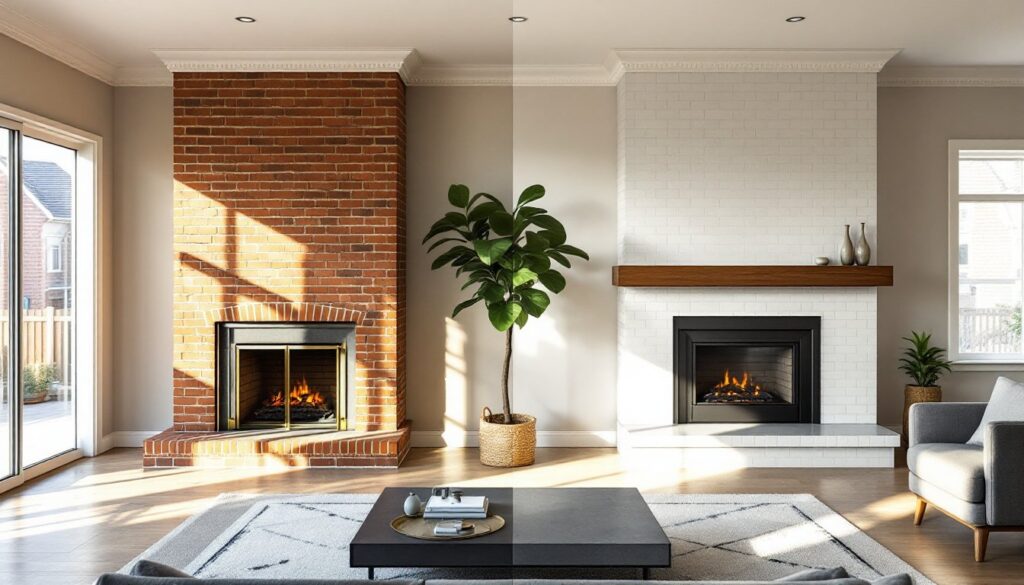
Avoid the temptation to paint brick pure white unless you’re committed, it’s hard to reverse. If you want a lighter look but aren’t sure about stark white, try a German schmear (a mortar wash technique) or a diluted limewash that lets some brick texture show through.
Rustic and Farmhouse Fireplace Updates
Shiplap, reclaimed wood, and chunky beam mantels continue to anchor farmhouse-style remodels. Horizontal shiplap (actual 1×6 or 1×8 pine boards, not vinyl planks) can be nailed directly over brick or drywall, but keep combustible material codes in mind. Most installations use a non-combustible backer board first, then attach wood with standoffs for airflow.
Stacked stone veneer remains popular here, Eldorado, Cultured Stone, and similar products offer ledger-style profiles that install with mortar or adhesive. A full surround typically requires 30–50 square feet of material, and you’ll want to order 10% extra for cuts and waste.
Pairing a rustic mantel with matte black fireplace doors or a cast-iron insert keeps the look grounded. Over-accessorizing with signs, mason jars, and faux greenery can veer into kitsch: a single large mirror or piece of art usually works better. Recent design inspiration platforms show a shift toward edited, less cluttered farmhouse interiors.
DIY vs. Professional Fireplace Remodeling: What You Need to Know
DIY-friendly projects include painting brick, installing peel-and-stick tile (for non-heat zones), swapping mantels, and updating trim or doors. These don’t require permits and can be done with basic tools: a drill, level, miter saw, and paintbrushes.
Painting brick requires TSP cleaning, a bonding primer (like KILZ or Zinsser), and at least two coats of heat-resistant paint if it’s near the firebox. Use a roller for large areas and a brush for mortar lines. Expect to spend a full weekend on prep and application.
Hire a pro when:
- Installing tile or stone that requires mortar, backer board, or precision cuts.
- Working with gas lines, electrical (for blowers or lighting), or venting.
- Removing or modifying a mantel attached to studs or masonry.
- Addressing structural issues like cracked fireboxes, damper problems, or chimney deterioration.
Masonry and tile work is unforgiving: a wavy tile line or inconsistent grout depth is obvious and hard to fix. A skilled tile setter will charge $10–$20 per square foot for labor, but the finished product will look clean and last decades. Many homeowners handle project planning and contractor matching online to compare bids and read reviews before committing.
If you’re converting from wood-burning to gas or adding an insert, expect permits and inspections. This isn’t optional, faulty venting or improper gas connections are fire and carbon monoxide hazards.
Common Fireplace Remodel Mistakes to Avoid
Ignoring clearance codes is the most dangerous mistake. Mantels, shelving, and combustible finishes must meet minimum distances from heat sources. Your local code might be stricter than manufacturer guidelines, always follow the more conservative number.
Skipping surface prep guarantees poor adhesion. Brick needs cleaning and sometimes a bonding agent before tile or veneer goes up. Paint won’t stick to soot, dust, or efflorescence (white mineral deposits). TSP or a masonry cleaner, followed by a thorough rinse, is non-negotiable.
Choosing tile without considering scale leads to busy, chaotic surrounds. Small mosaics can look great as an accent but overwhelming across 40 square feet. Large-format tile or stacked stone in a single color reads cleaner and ages better.
Over-customizing for resale can backfire. A bright teal tile surround or ultra-modern floating firebox might thrill you but alienate buyers. If you plan to sell within a few years, lean neutral. If this is your forever home, go bold, but know you might need to redo it later.
Not accounting for the mantel’s weight causes sagging or collapse. A solid wood beam can weigh 50+ pounds. If you’re attaching to drywall, use toggle bolts or blocking behind the drywall anchored to studs. Mounting to brick requires masonry screws or sleeve anchors, pre-drilled with a hammer drill and masonry bit.
Forgetting about the hearth is a visual misstep. The hearth extension (the non-combustible floor area in front of the firebox) often gets ignored during remodels. If it’s cracked, stained, or clashing with the new surround, address it. Tile, stone, or even poured concrete can update a hearth for a few hundred dollars and a day’s work.