Table of Contents
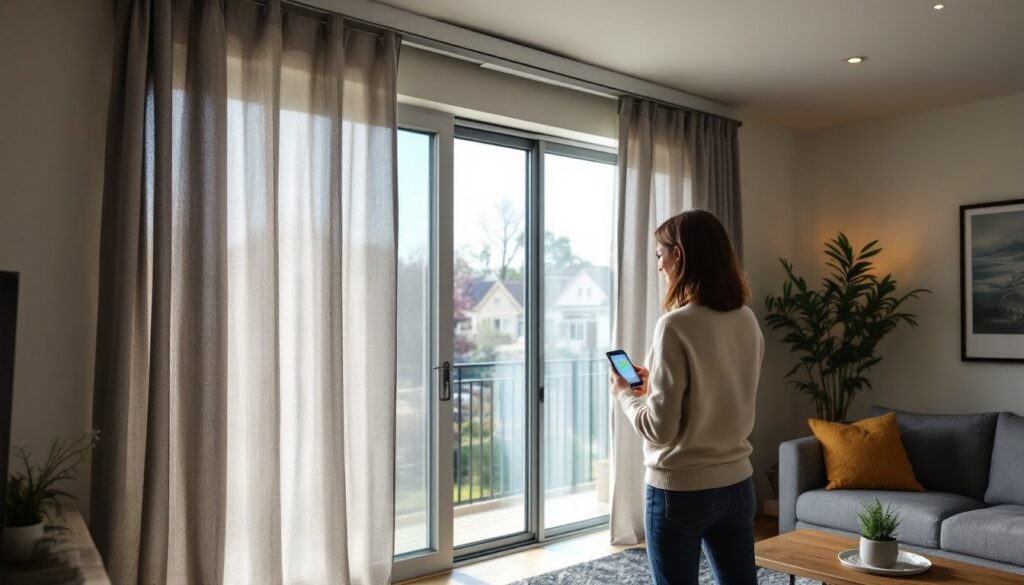
ToggleSmart curtains automate one of the most repetitive tasks in any home: opening and closing window treatments. They operate on schedules, voice commands, or smartphone apps, adjusting privacy and light without touching a cord or wand. For homeowners already invested in connected devices, automated curtains complete the picture, integrating with thermostats, security systems, and lighting scenes. The technology has matured significantly. Motors are quieter, batteries last longer, and compatibility across ecosystems is the norm. This guide covers how smart curtains work, what benefits they deliver, and how to choose and install the right system for your windows.
Key Takeaways
- Smart home curtains automate window control via apps, voice commands, or schedules, reducing energy costs by up to 30% during summer while improving security and accessibility.
- Motorized tracks support heavier fabrics and longer spans (up to 50 pounds and 12+ feet), while smart rods retrofit existing setups in under 30 minutes without drilling.
- Compatibility with Amazon Alexa, Google Assistant, Apple HomeKit, or Samsung SmartThings is essential for seamless integration into your existing home automation ecosystem.
- DIY installation is feasible for smart rod and retrofit systems, but professional installation ($150–$300 per window) is recommended for multi-window projects and hardwired configurations.
- Smart curtains integrate with thermostats, security systems, and lighting to create comprehensive automation scenes like “Good Morning” and “Goodnight” routines.
- Prioritize quiet motors (below 40 decibels), manual override features, and proper fabric weight compatibility when selecting your smart home curtain system.
What Are Smart Home Curtains and How Do They Work?
Smart curtains consist of motorized hardware attached to a track or rod, paired with a control module that connects to Wi-Fi, Zigbee, or Bluetooth. The motor draws power from a plug-in adapter, hardwired circuit, or rechargeable battery pack.
When a user triggers a command, via app, voice assistant, or automation schedule, the control module sends a signal to the motor. The motor then opens or closes the curtain along the track at a preset speed. Most systems include limit switches or magnetic stops to prevent over-travel and fabric damage.
Sensors add intelligence. Light sensors can close curtains when the sun hits a window, reducing glare and heat gain. Temperature sensors coordinate with HVAC systems to block midday sun or capture morning warmth. Motion sensors trigger curtains during security routines, simulating occupancy when the house is empty.
Communication protocols matter. Wi-Fi systems connect directly to your router and work with apps like Google Home or Amazon Alexa. Zigbee and Z-Wave models require a hub but consume less power and reduce network congestion. Thread protocol support is emerging in 2026, offering lower latency and better mesh reliability.
Key Benefits of Installing Smart Curtains in Your Home
Energy efficiency tops the list. Automated curtains can reduce cooling costs by up to 30% during summer by blocking solar heat gain during peak hours. In winter, they retain indoor warmth by closing at dusk. Many smart home strategies incorporate window automation for year-round climate control.
Convenience eliminates daily chores. Scheduled routines open curtains at sunrise and close them at sunset. Voice commands handle adjustments without leaving the couch. Remote access via smartphone means controlling curtains from the office or vacation.
UV protection preserves flooring, furniture, and artwork. Automated blackout curtains shield rooms during the brightest hours, extending the life of finishes and fabrics. Motorized sheers provide daytime privacy without sacrificing natural light.
Security improves with automated presence simulation. When homeowners are away, curtains open and close on varied schedules, deterring break-ins by suggesting occupancy. Integration with smart locks and cameras creates layered security routines.
Accessibility assists those with mobility limitations. Curtains that respond to voice or automated schedules eliminate the need to reach, pull, or climb. Elderly users and individuals with disabilities gain independence without compromising window coverage.
Types of Smart Curtain Systems: Finding the Right Fit
Choosing the right system depends on window size, existing treatments, and budget. Two primary categories dominate the market.
Motorized Tracks vs. Smart Rods
Motorized tracks support heavier fabrics and longer spans. Tracks mount to the ceiling or wall and use wheeled carriers pulled by a belt or chain drive. They handle drapery up to 50 pounds and spans exceeding 12 feet. Tracks work best for floor-to-ceiling treatments, sliding panels, and blackout curtains. Installation requires drilling and bracket mounting: expect to spend 2–4 hours per window, depending on complexity.
Examples include systems with concealed motors and rechargeable lithium-ion batteries lasting 6–12 months per charge. Tracks accommodate both single and dual-panel configurations.
Smart rods retrofit existing curtain setups. A motorized unit clips onto a standard 1-inch or 1⅜-inch rod, pushing or pulling the curtain via a small drive wheel. Weight limits top out around 20 pounds, suitable for lightweight drapes and sheers. Rods install in under 30 minutes with no drilling, ideal for renters or temporary setups.
Battery-powered smart rods use AA or rechargeable cells. Plug-in versions eliminate battery swaps but require an outlet near the window.
Retrofit kits convert existing manual curtains without replacing hardware. These attach to the curtain’s leading edge or mount behind the fabric, pulling the treatment open via a cord mechanism. Weight capacity and aesthetics vary: some units remain visible below the rod.
Top Smart Home Curtain Features to Look For
Prioritize compatibility with existing ecosystems. Systems certified for Amazon Alexa, Google Assistant, Apple HomeKit, or Samsung SmartThings integrate into voice routines and automation scenes. Some manufacturers support multiple platforms simultaneously: others lock into a single ecosystem.
Quiet operation matters in bedrooms and home offices. Motors rated below 40 decibels operate nearly silently. Cheaper units produce noticeable whirring or clicking, fine for living rooms, problematic for nurseries.
Power options affect placement. Hardwired systems require an electrician but never need charging. Battery-powered models install anywhere but demand periodic recharging or cell replacement. Solar-rechargeable batteries extend intervals in sunny rooms.
App control should include scheduling, grouping, and scene creation. Quality apps let users combine multiple windows into a single command, set sunrise/sunset triggers, and adjust speed settings. Geofencing opens curtains when you arrive home.
Manual override prevents lockouts during power outages or Wi-Fi failures. Look for systems with a pull-to-open feature or a disengagement clutch that allows hand operation without damaging the motor.
Fabric compatibility varies by motor torque. Lightweight sheers and linen drapes work with most systems. Blackout curtains, thermal linings, and velvet require motors rated for heavier loads. Verify weight limits before purchasing fabric.
Research from home automation reviews suggests checking for firmware update support, ensuring the system remains compatible as smart home standards evolve.
Installation Guide: DIY or Professional Setup?
DIY installation suits most smart rod and retrofit systems. Required tools include a drill/driver, level, tape measure, stud finder, and pencil. Wear safety glasses when drilling overhead.
Steps for motorized track installation:
- Measure the window. Tracks should extend 4–6 inches beyond each side of the frame for full coverage. Confirm ceiling or wall studs are available for bracket placement.
- Mark bracket locations. Use a level to ensure alignment. Brackets typically space 24–36 inches apart, with end brackets within 3 inches of track ends.
- Drill pilot holes into studs or use toggle bolts for drywall. Bracket screws must support the combined weight of track, motor, and fabric, typically 60+ pounds.
- Mount the track onto brackets. Snap or screw the track into place per manufacturer instructions.
- Install the motor unit at one end of the track. Route power cables along the wall or behind trim.
- Attach curtain carriers to the fabric header and hang on the track. Adjust limit switches so the curtain stops at the correct open and closed positions.
- Pair with the app or hub. Follow setup prompts to connect to Wi-Fi and test operation.
Smart rod installation simplifies the process:
- Mount the rod brackets at the desired height, ensuring the rod is level.
- Clip the motorized unit onto the rod near the window’s outer edge.
- Hang the curtain and attach the drive wheel to the leading edge.
- Charge or install batteries, then pair with the app.
Professional installation makes sense for multi-window projects, hardwired systems, or complex home automation integration. Expect to pay $150–$300 per window for labor, depending on region and difficulty. Professionals ensure proper load support, concealed wiring, and coordination with other smart home devices.
Permits are rarely required for curtain installation unless running new electrical circuits. Check local codes if hardwiring motors.
Integrating Smart Curtains with Your Home Automation System
Smart curtains shine when linked to broader automation routines. Start by creating scenes in your hub app. A “Good Morning” scene opens bedroom curtains, raises the thermostat, and starts the coffee maker. “Goodnight” closes all curtains, locks doors, and dims lights.
Voice assistants simplify ad-hoc control. Commands like “Alexa, close the living room curtains” or “Hey Google, open the bedroom shades to 50%” adjust individual windows without opening an app.
IFTTT and advanced automation platforms enable conditional triggers. Examples include closing curtains when indoor temperature exceeds 75°F, opening them when a security camera detects motion at the front door, or adjusting based on weather forecasts.
Many connected home setups pair curtains with smart thermostats. When the thermostat enters cooling mode, south-facing curtains close automatically. In heating mode, they open to capture solar gain.
Dashboard integration places curtain controls alongside lighting, locks, and cameras. Tablets mounted near entryways provide one-touch access to whole-home scenes. Some users configure smart tech tools to display curtain status in real time.
Consider Zigbee or Z-Wave systems if building a hub-based network. These protocols reduce Wi-Fi congestion and allow curtains to act as mesh repeaters, strengthening signal range for other devices.
For design-focused projects, ideas from modern home automation emphasize concealing motors and tracks within architectural details, maintaining clean sightlines while preserving functionality.
Smart curtains represent a practical upgrade that delivers tangible comfort, energy savings, and convenience. Whether retrofitting existing treatments or planning new construction, automated window control ties together lighting, climate, and security into a cohesive system. Choose components based on fabric weight, power preferences, and ecosystem compatibility, then enjoy windows that manage themselves.