Table of Contents
ToggleMost homeowners think dishwashers come in three flavors: white, black, or stainless steel. But if someone’s designing a high-end kitchen or renovating with specific aesthetic goals, a bespoke dishwasher opens up a whole new level of integration. These aren’t off-the-shelf appliances with a decorative panel slapped on, they’re fully customizable units designed to disappear into cabinetry or make a deliberate design statement. From custom panel finishes to interior rack configurations tailored to how a household actually uses dishes, bespoke dishwashers blend form and function in ways standard models can’t touch.
Key Takeaways
- A bespoke dishwasher is a custom or semi-custom appliance that seamlessly integrates with kitchen cabinetry through panel-ready designs, custom finishes, and personalized configurations instead of standard off-the-shelf models.
- Bespoke dishwashers offer aesthetic continuity, quieter operation (38–42 dBA), and adaptability to non-standard cabinet dimensions, making them ideal for high-end kitchens, historic renovations, and open-concept layouts.
- Interior customization options like adjustable racks, third racks with dedicated cutlery zones, and removable tine rows allow you to tailor the bespoke dishwasher to your household’s specific washing needs and dish types.
- Expect to budget $800–$3,000+ for a bespoke dishwasher unit, plus $150–$400 for a custom cabinet-match panel and $150–$400 for installation, with total project costs depending on customization level and complexity.
- Proper installation requires confirming rough-in dimensions (24″ wide, 24″ deep, 34–35″ tall), setting up dedicated electrical circuits, routing drain lines with high loops to prevent backflow, and securing the appliance to prevent tipping.
- Bespoke dishwashers justify their premium cost through design cohesion, potential resale value, and long-term satisfaction for forever homes, though standard models remain more practical for quick flips or rental properties.
What Is a Bespoke Dishwasher?
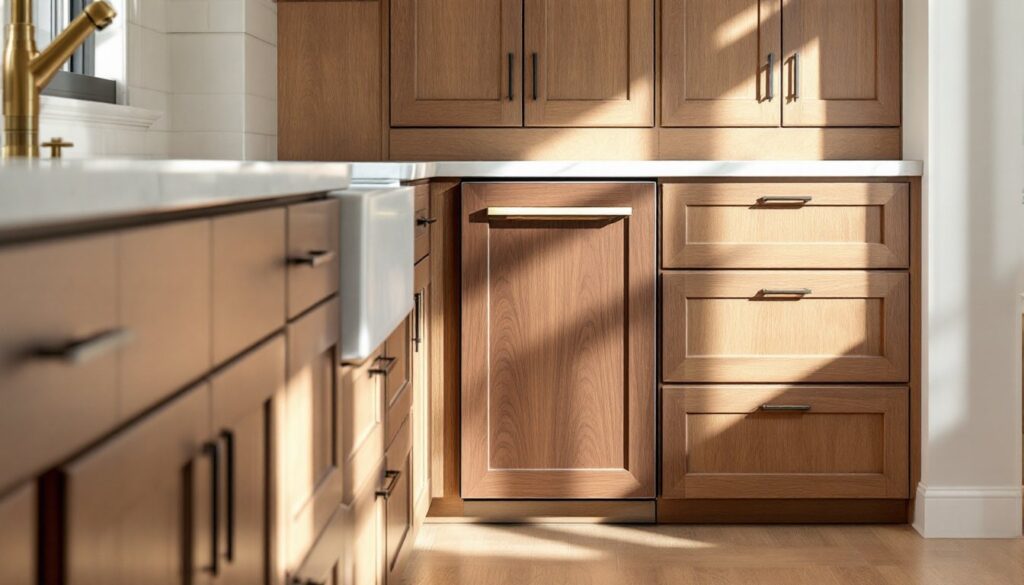
A bespoke dishwasher is a custom or semi-custom appliance designed to match specific kitchen aesthetics, cabinet configurations, or functional requirements. Unlike standard models with fixed exterior finishes, bespoke units typically feature panel-ready designs that accept custom cabinet fronts, allowing them to blend seamlessly with surrounding cabinetry.
Some manufacturers use “bespoke” to describe modular systems with interchangeable color panels, handles, and finishes selected from a curated palette. Others offer true custom work, panels machined to exact dimensions, specialty finishes like brass or copper, or even hand-painted designs.
The key distinction: a bespoke dishwasher prioritizes design integration and personalization. It’s built (or configured) to fit the kitchen’s design language, not the other way around. Most units are fully integrated, meaning controls are hidden on the top edge of the door rather than visible on the front panel.
These appliances typically maintain the same core wash technology as their standard counterparts, spray arms, filtration, drying systems, but the exterior and sometimes the interior layout can be tailored. They’re common in high-end residential builds, historic home renovations where modern appliances need to stay invisible, and kitchens where every detail is color- and material-matched.
Why Choose a Bespoke Dishwasher for Your Kitchen?
The primary advantage is aesthetic continuity. When cabinet fronts, hardware, and finishes flow uninterrupted across the kitchen, the dishwasher doesn’t announce itself as an appliance. This is especially valuable in open-concept layouts where the kitchen is on display from living and dining areas.
For homeowners working with non-standard cabinetry dimensions, common in older homes or custom millwork, panel-ready bespoke models adapt more easily than stock units. Cabinet makers can build a matching door to exact specs, accounting for reveal gaps, hinge types, and alignment with adjacent drawers.
Bespoke dishwashers also offer quieter operation in many cases. Premium models often include enhanced insulation, advanced motor mounts, and sound-dampening materials. Decibel ratings of 38–42 dBA are common, comparable to a quiet library. That’s a meaningful upgrade if the kitchen shares a wall with a bedroom or home office.
Some systems allow interior customization, too. Adjustable rack systems, removable tine rows, and third racks with dedicated cutlery zones improve usability for households with specific needs, large mixing bowls, wine glasses, or sheet pans that don’t fit standard layouts.
Finally, resale value. A well-integrated, high-quality appliance suite can be a selling point in markets where buyers expect designer kitchens. It signals attention to detail and cohesive planning.
Custom Design Options and Features
Panel Customization and Finish Choices
Panel-ready models ship with a mounting system on the door designed to accept a custom front panel, typically 3/4-inch thick material matching the kitchen cabinets. The panel is secured with brackets or clips provided by the manufacturer. Homeowners (or their cabinet maker) supply the door, cut to specified dimensions with tolerances usually within 1/16 inch.
Common panel materials include hardwood (maple, cherry, walnut), MDF with paint-grade finish, or even metal and glass in ultra-modern kitchens. The panel must be within the unit’s weight capacity, most manufacturers specify a maximum of 20–30 pounds for the door panel to avoid hinge strain and ensure proper door balance.
Some brands offer modular color panels instead of fully custom work. These systems provide a range of powder-coated metal or baked enamel finishes, matte black, navy, sage green, blush pink, that clip onto the appliance frame. Handles are sold separately, allowing for brushed brass, polished nickel, leather-wrapped, or matte black options.
Finish durability matters. Powder-coated panels resist fingerprints and smudges better than glossy or stainless finishes. Painted wood panels should be sealed with a water-resistant topcoat, especially near the sink.
Interior Configuration and Rack Systems
Interior customization starts with rack adjustability. Look for upper racks with height adjustment, usually 2–3 inches of range, to accommodate tall items on the bottom rack, like stockpots or stand mixer bowls.
Third racks are now standard on many premium models. These shallow top racks hold flatware, utensils, small bowls, and lids, freeing up space below. Some include adjustable dividers or fold-down tines for awkwardly shaped items like serving spoons or spatulas.
Removable tine rows on the lower rack create flexibility for large or oddly shaped dishes. Serious home cooks often remove tines to fit baking sheets, cutting boards, or oversized platters that wouldn’t fit in a fixed configuration.
Some luxury dishwashers with advanced features include zone washing, independent spray arms or detergent dispensers for different rack levels, so delicate glassware on top gets a gentle cycle while crusted casserole dishes below get heavy scrubbing.
Cutlery baskets vs. third-rack slots: baskets are easier for mixed loads and families, but third-rack slots dry flatware better and save lower-rack space.
How to Plan Your Bespoke Dishwasher Installation
Planning starts with rough-in dimensions. Standard dishwasher openings are 24 inches wide, 24 inches deep, and 34–35 inches tall (accounting for countertop overhang and adjustable legs). Confirm the exact cutout dimensions with the manufacturer’s spec sheet before cabinetry is built.
Check electrical and plumbing requirements early. Most dishwashers need a dedicated 120V, 15-amp circuit per NEC guidelines. The electrical box is typically located in the adjacent sink cabinet, within 4–6 feet of the appliance. A licensed electrician should handle any new circuit work, and local codes may require a permit.
Water supply is a 3/8-inch compression fitting off the hot water line, usually under the sink. Install a shutoff valve for easy maintenance. The drain line connects to the sink’s tailpiece or garbage disposal with a 5/8-inch or 7/8-inch hose (check appliance specs). The drain hose must include a high loop, routed up to the underside of the countertop, to prevent backflow, or connect to an air gap if required by local plumbing code.
For panel-ready installations, the cabinet door is attached after the unit is in place. Most manufacturers provide a template showing mounting hole locations. The installer (or homeowner) drills pilot holes, attaches mounting brackets, and secures the panel with screws. Alignment is critical, misaligned doors create uneven reveals and stress hinges.
Dishwashers must be secured to the underside of the countertop with mounting brackets to prevent tipping when the door is open and racks are pulled out. This is a safety requirement, especially in homes with kids.
If integrating into existing cabinetry, confirm there’s adequate ventilation around the unit. Some models vent through the toe kick: others need side clearance. Blocking airflow can overheat the motor or electronics.
Hire a pro if the installation involves moving plumbing lines, cutting into tile backsplashes, or modifying structural cabinetry. Panel-ready installs are more forgiving for confident DIYers with carpentry skills, but the appliance hookup itself, plumbing and electrical, often benefits from a licensed tradesperson, particularly for warranty coverage.
Cost Considerations: What to Expect
Bespoke dishwashers span a wide price range depending on customization level and brand. Panel-ready models from mainstream manufacturers start around $800–$1,200. Premium European brands with advanced wash systems, ultra-quiet operation, and refined engineering run $1,500–$3,000. Fully custom units with hand-applied finishes, bespoke interior configurations, or rare materials can exceed $5,000.
The custom panel itself adds to the budget. A cabinet-match door from a millwork shop typically costs $150–$400, depending on wood species, finish complexity, and shop rates. If the entire kitchen is being built by a custom cabinet maker, the panel is usually included in the cabinetry quote.
Some manufacturers’ modular color panel systems charge $200–$500 per appliance for interchangeable fronts and handles, which is less than fully custom but more than a standard stainless unit.
Installation labor ranges from $150–$400 if plumbing and electrical are already in place and only the appliance swap is needed. New rough-ins, circuit additions, or cabinetry modifications add $300–$800+ depending on complexity and regional labor rates.
Over time, operating costs are comparable to standard dishwashers. Most bespoke models are Energy Star certified, using around 3–4 gallons per cycle and 270–300 kWh annually. Water and energy savings vs. hand-washing can offset the premium over several years, though the payback period is longer than with budget models.
Maintenance and parts availability matter, too. Luxury brands sometimes have longer lead times for replacement parts or require authorized service techs, which can increase repair costs. Confirm warranty coverage (typically 1–2 years parts and labor, with extended options) and research local service availability before committing.
For context, high-performing luxury and integrated dishwashers often balance premium features with dependable service networks, which is a key consideration when investing in custom appliances.
Homeowners should budget for the full ecosystem: appliance, panel, installation, and any cabinetry adjustments. Transparent quotes from the cabinet maker, appliance dealer, and installer prevent surprise costs mid-project. In competitive metro markets or during supply shortages, lead times for custom panels and high-end appliances can stretch 8–12 weeks, so plan accordingly.
Eventually, bespoke dishwashers suit projects where design cohesion and long-term satisfaction justify the upfront investment. For quick flips or rentals, standard models make more sense. But for homeowners building their forever kitchen, or designers crafting showpiece spaces, the seamless integration and tailored functionality can be worth every dollar.