Table of Contents
ToggleSwapping out a miter saw blade isn’t glamorous work, but it’s one of those tasks that separates clean cuts from splintered edges and burning wood. A 12 inch miter saw blade is the workhorse for most homeowners and DIYers tackling trim work, deck boards, or furniture projects. But here’s the thing: not all 12 inch blades are created equal. The blade that came with your saw? It’s usually a compromise, decent at everything, great at nothing. Whether you’re crosscutting oak or slicing through pine molding, understanding blade types, tooth count, and maintenance will save you time, material, and frustration.
Key Takeaways
- A 12 inch miter saw blade’s size determines cutting capacity, enabling crosscuts on boards up to 12–14 inches wide and handling 2x material at various angles, making it essential for trim work and deck projects.
- Tooth count is critical to blade performance—general purpose blades with 40–60 teeth work best for rough cuts, while fine finish blades with 80–100 teeth produce smooth, splinter-free edges ideal for trim and cabinetry.
- Carbide-tipped teeth with proper heat-resistant coatings, expansion slots, and correct hook angles (5–10 degrees for crosscutting) are key features that separate quality blades from budget options.
- Always confirm your saw’s arbor diameter (usually 1 inch) before purchasing a 12 inch miter saw blade, and ensure the blade’s maximum RPM rating exceeds your saw’s operating speed for safe operation.
- Regular maintenance—cleaning pitch buildup every 10–20 hours, inspecting for damage, and knowing when to sharpen versus replace—extends blade life and ensures consistent cutting performance.
- Install your 12 inch miter saw blade safely by unplugging the saw, using the spindle lock, and checking that blade teeth point downward; rotating between multiple specialized blades for different tasks optimizes performance and reduces wear.
What Is a 12 Inch Miter Saw Blade and Why Size Matters
A 12 inch miter saw blade measures 12 inches in diameter from tooth tip to tooth tip. This size is standard for 12-inch sliding and compound miter saws, which are among the most common saws in home workshops. The blade mounts to a 1-inch arbor (the spindle shaft) using a flanged washer and arbor nut.
Size matters because blade diameter determines cutting capacity. A 12-inch blade can crosscut wider boards and thicker stock than smaller 10-inch or 7-1/4-inch blades. On a sliding miter saw, a 12-inch blade typically crosscuts boards up to 12–14 inches wide at 90 degrees and handles 2x material at various angles without breaking a sweat. If you’re trimming out a room or building a deck, that extra capacity means fewer passes and less repositioning.
Arbor size is critical. Most 12-inch miter saws use a 1-inch arbor, but a few older or specialty models use a 5/8-inch arbor. Always confirm your saw’s arbor diameter before buying a blade, it’s stamped on the blade guard or listed in the manual. Using the wrong arbor size is unsafe and won’t mount properly.
Blade thickness, or kerf, also impacts performance. Standard kerf blades (about 0.125 inches thick) remove more material but create smoother cuts in hardwoods. Thin-kerf blades (around 0.091 inches) require less motor power and are ideal for underpowered saws or cutting softer materials like pine. Most 12-inch miter saws handle standard kerf blades without issue.
Types of 12 Inch Miter Saw Blades for Different Materials
Choosing the right blade type depends on what you’re cutting and how clean the edge needs to be. Tooth count is the main differentiator. More teeth mean smoother cuts but slower feed rates: fewer teeth cut faster but leave rougher edges.
General Purpose Blades
General purpose blades (also called combination blades) typically have 40 to 60 teeth and handle a mix of ripping and crosscutting tasks. These are the blades that come stock with most saws, they’re versatile but don’t excel at any one job.
For framing lumber, deck boards, or rough carpentry, a 40-tooth blade is fast and efficient. The wider gullets (the spaces between teeth) clear sawdust quickly, reducing heat buildup. If you’re cutting pressure-treated 2x6s or construction-grade pine, a general purpose blade gets the job done without fuss.
Many homeowners find that a 50- or 60-tooth combination blade strikes a good balance for trim work and general cutting. It’s smooth enough for visible cuts on baseboards and door casings but still aggressive enough for breaking down plywood or cutting studs to length. For a single-blade workshop, this is the safe bet.
Fine Finish and Crosscut Blades
Fine finish blades (also called crosscut or trim blades) pack 80 to 100 teeth and are designed for clean, splinter-free cuts on hardwoods, veneered plywood, and finish-grade lumber. If you’re installing crown molding or building cabinets, this is where tooth count earns its keep.
The high tooth count leaves a polished edge that often needs no sanding. The trade-off? These blades cut slower and generate more heat, so feed the material steadily without forcing it. Forcing creates burn marks, especially on oak or maple.
Crosscut blades typically feature alternate top bevel (ATB) teeth, which slice wood fibers cleanly rather than tearing them. Some premium blades add a high ATB angle (up to 20 degrees) for ultra-smooth cuts. These are overkill for framing but make a noticeable difference when the cut will be visible.
For cutting laminate flooring or melamine-coated panels, look for blades labeled as non-ferrous or laminate-specific. These often have triple-chip grind (TCG) teeth, which alternate between a flat-top tooth and a chamfered tooth to prevent chipping on brittle materials. Many experienced DIYers keep a dedicated laminate blade to avoid switching mid-project.
If you’re working with aluminum trim or PVC molding (common in wet areas like bathrooms), a non-ferrous blade is essential. Standard wood blades will gum up quickly and won’t leave a clean edge on metal or plastic.
Key Features to Look for in a Quality 12 Inch Miter Saw Blade
Not all 12 inch miter saw blades are stamped from the same steel. A few features separate budget blades from ones that’ll last through multiple projects.
Carbide-tipped teeth are standard on any blade worth buying. Carbide stays sharp 10–20 times longer than high-speed steel and handles abrasive materials like MDF or pressure-treated lumber without dulling quickly. Look for thick carbide tips, cheap blades skimp here, and the tips wear down fast.
Expansion slots (the narrow cuts radiating out from the arbor hole) allow the blade to expand as it heats up during use. Without them, the blade can warp or cause vibration. Higher-end blades add laser-cut stabilizer vents to further reduce noise and vibration, which means cleaner cuts and less strain on the saw motor.
Coating matters more than most DIYers realize. Blades with Teflon, PTFE, or proprietary coatings reduce friction and pitch buildup (the sticky resin that accumulates from cutting softwoods). A coated blade runs cooler and stays cleaner between sharpenings. If you’re cutting a lot of pine or treated lumber, this feature pays for itself.
Hook angle (or rake angle) refers to how much the tooth leans forward. Aggressive hook angles (15–20 degrees) grab the wood and pull it through quickly, great for ripping but risky on a miter saw, where the blade could grab the workpiece. Most crosscut blades for finish work use a 5- to 10-degree hook angle for better control and smoother cuts.
Plate thickness and hardness affect blade stability. Thicker plates resist flexing under load, which translates to straighter cuts. Some manufacturers laser-cut the plate and then heat-treat it to reduce internal stress. You’ll see this advertised as “hardened steel body” or “precision-balanced plate.”
Finally, check the maximum RPM rating stamped on the blade. Most 12-inch miter saws spin at 3,000–4,000 RPM, and the blade must be rated above that speed. Using an under-rated blade is a safety hazard, it can crack or shatter under stress.
How to Install and Replace Your 12 Inch Miter Saw Blade Safely
Changing a miter saw blade takes about five minutes if you know the steps. Do it wrong, and you’re looking at a trip to the ER or a ruined blade. Always unplug the saw before starting, this isn’t optional.
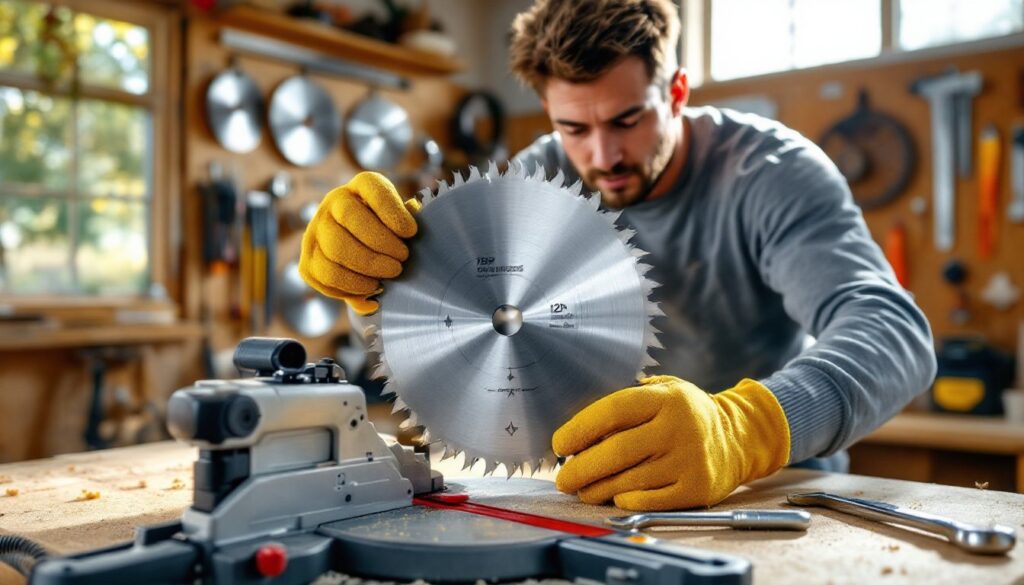
Step 1: Raise the blade guard and lock the saw head in the down position (most saws have a pin or lever for this). If your saw has a spindle lock button (usually near the motor housing), press and hold it while turning the blade by hand until it clicks into place. This locks the arbor so you can loosen the arbor nut.
Step 2: Use the wrench that came with your saw (it’s often stored on the saw itself) to loosen the arbor nut. Most miter saws have reverse-threaded arbor nuts, meaning you turn clockwise to loosen and counterclockwise to tighten. Check your manual if you’re not sure, forcing the wrong direction can strip threads.
Step 3: Remove the outer washer and blade. Note the direction of the teeth, they should point downward at the front of the saw when installed. If the teeth point backward, the blade will kick back violently. Many blades have an arrow stamped on the side indicating rotation direction.
Step 4: Slide the new blade onto the arbor, making sure it sits flush against the inner flange. Replace the outer washer and hand-tighten the arbor nut. Then use the wrench to snug it down, firm, but not gorilla-tight. Over-tightening can warp the blade or damage the arbor threads.
Step 5: Release the spindle lock, lower the blade guard, and plug the saw back in. Make a test cut on scrap wood to confirm the blade is seated correctly and cutting smoothly. If you hear unusual vibration or wobbling, stop immediately and recheck the installation.
Safety note: Wear safety glasses during blade changes. Even with the saw unplugged, a slipped wrench or dropped blade can cause injury. Keep your fingers clear of the teeth, carbide tips are razor-sharp even when dull.
Maintenance Tips to Extend Your Blade’s Lifespan
A sharp blade cuts cleaner, safer, and faster than a dull one. Most homeowners run blades far past their prime because they don’t notice the gradual decline in performance. Here’s how to keep your blade in fighting shape.
Clean pitch and resin buildup regularly. After cutting a few dozen feet of pine or treated lumber, the blade will accumulate sticky brown gunk. This causes friction, heat, and burn marks. Remove the blade and soak it for 10–15 minutes in a shallow pan of household blade cleaner or oven cleaner. Scrub gently with a brass brush or nylon scrub pad (avoid steel brushes, they can damage carbide tips). Rinse, dry, and reinstall. Do this every 10–20 hours of cutting, or whenever you notice burn marks.
Inspect for damage before each use. Check for chipped or broken carbide tips, cracks in the plate, or bent teeth. A damaged blade is a safety hazard and should be replaced immediately, don’t try to “get one more cut” out of it.
Store blades properly. Hang them on pegboard hooks or store them in blade cases. Tossing them loose in a drawer dulls teeth and invites rust. If you live in a humid climate, wipe blades with a thin coat of machine oil or blade protectant before storage.
Know when to sharpen vs. replace. Carbide-tipped blades can be professionally sharpened 3–5 times before the carbide tips are too small to be effective. Sharpening costs $10–$20 per blade and is worth it for high-quality blades. Budget blades (under $25) are often cheaper to replace than sharpen.
Signs a blade needs sharpening:
- Burn marks on the wood even with a steady feed rate
- Excessive splintering or tear-out on the back edge of cuts
- Motor bogging down during cuts that used to be easy
- Visible dullness on carbide tips (they’ll look rounded instead of sharp)
Many experienced woodworkers keep two or three blades on hand: a general purpose blade for rough work, a fine-finish blade for trim, and a sacrificial blade for cutting treated lumber or demolition material. Rotating blades based on the task reduces wear and keeps each blade optimized for its job.
Finally, check blade alignment if cuts aren’t square. A blade that’s even slightly out of parallel with the fence will leave angled edges. Most saws have adjustment bolts to square the blade to the table and fence, consult your manual and use a combination square to dial it in. Proper alignment reduces blade wear and improves cut quality.