Table of Contents
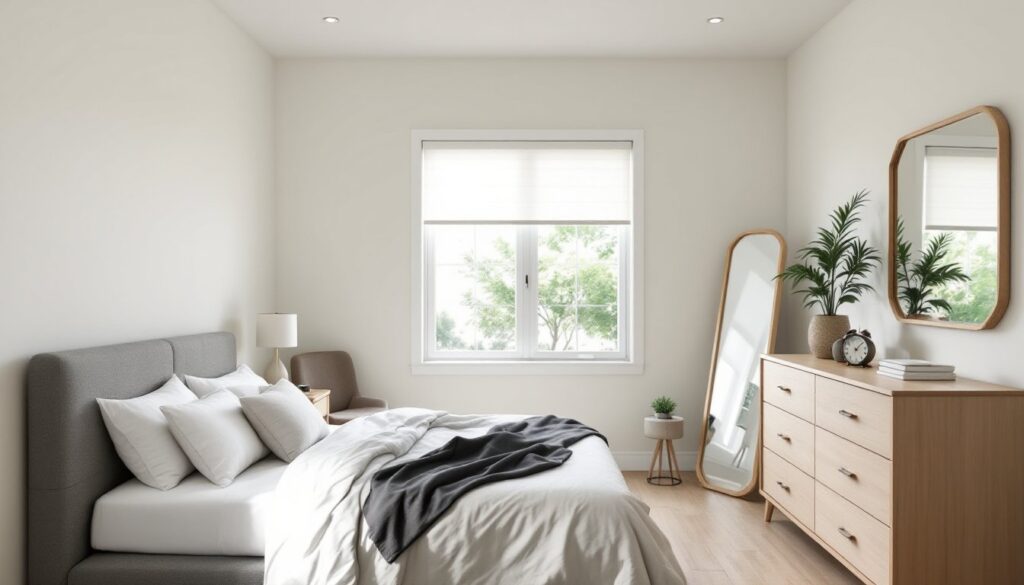
ToggleA 10×10 bedroom offers exactly 100 square feet, enough for a comfortable sleep space, but tight enough that every layout decision matters. One misplaced dresser or oversized bed frame can turn a cozy room into a claustrophobic box. The good news? Standard furniture dimensions and smart placement strategies make these compact spaces surprisingly functional. Whether setting up a guest room, a kid’s bedroom, or a primary suite in an older home, the right layout transforms constraint into efficiency. This guide walks through furniture placement, storage tactics, and visual strategies that make a 10×10 bedroom work without feeling cramped.
Key Takeaways
- A 10×10 bedroom layout requires careful planning since every furniture placement decision impacts functionality and perceived space in this 100-square-foot room.
- Position your bed on the longest wall, in a corner, or floating 12-18 inches from the wall, depending on whether you prioritize symmetry, additional floor space, or visual intentionality.
- Vertical storage solutions like wall-mounted shelves, under-bed drawers, and closet organizers maximize storage without consuming floor space in a 10×10 bedroom.
- Light wall colors, full-length mirrors, and low-profile furniture make small bedrooms feel larger by reflecting light and maintaining clear sightlines.
- Avoid common mistakes such as blocking door swings, oversizing furniture (king beds won’t fit), and filling the room with non-essential pieces that create a cluttered appearance.
- Incorporate layered lighting with bedside lamps and task lights rather than relying on a single overhead fixture to improve functionality and ambiance.
Understanding Your 10×10 Bedroom Space
A 10-foot by 10-foot bedroom provides 100 square feet of floor area, slightly larger than a parking space, slightly smaller than most living rooms. Before moving furniture, measure the actual dimensions. Older homes sometimes list room sizes as approximate, and closets, door swings, or radiators can eat into usable space.
Account for clearances. Building codes typically require 36 inches of clear walkway around a bed for egress, though tight spaces can function with 24 to 30 inches if needed. Door swings consume roughly 9 to 12 square feet depending on the door width (standard interior doors are 30 to 32 inches wide). Windows, baseboard heaters, and electrical outlets also dictate where furniture can realistically sit.
Map fixed elements first. Note window height and sill depth (standard sills sit 36 to 48 inches above the floor). Mark outlet locations, most bedrooms have outlets on at least two walls, spaced per NEC code (no point along a wall should be more than 6 feet from an outlet). If a radiator or HVAC vent occupies a wall, leave 6 to 12 inches clearance to avoid blocking airflow.
Draft a scaled floor plan on graph paper (¼ inch = 1 foot works well) or use a free tool like RoomSketcher. Measure furniture before buying, a queen bed is 60 by 80 inches, a full is 54 by 75 inches. Add 2 to 4 inches per side for bedding overhang and frame dimensions.
Essential Furniture Placement for a 10×10 Bedroom
Start with the bed, it’s the largest piece and anchors the layout. In a 100-square-foot room, a queen bed (60 by 80 inches) is the practical maximum. A full-size bed (54 by 75 inches) leaves more breathing room and is often the better choice if the occupant is under six feet tall or the room serves double duty as a workspace.
Nightstands and dressers. A single nightstand (typically 18 to 24 inches wide) fits beside the bed in most layouts. If space is tight, wall-mounted floating shelves or a narrow ledge (10 to 12 inches deep) works just as well for a lamp, phone, and alarm clock. A standard six-drawer dresser runs 48 to 60 inches wide and 18 inches deep, feasible in a 10×10 room, but only if placed on a wall opposite or perpendicular to the bed.
Avoid placing a dresser at the foot of the bed unless at least 36 inches of clearance remains for walking. Better to skip the dresser entirely and use a closet organizer system or under-bed storage.
Seating. A small armchair (28 to 32 inches wide) or a compact reading nook fits in a corner if the bed is positioned efficiently. Skip bulky recliners or oversized accent chairs, they dominate too much floor space relative to their function.
Bed Positioning Options
The bed’s orientation determines how the rest of the room functions. Three layouts work well in a 10×10 space:
Centered on the longest wall. This classic setup places the headboard against one 10-foot wall, centered. It balances the room visually and allows nightstands on both sides. Leave at least 24 inches on each side for access. This layout works best when the door is on an adjacent wall, not directly opposite the bed.
Corner placement. Pushing the bed into a corner (headboard against one wall, one side against another) frees up floor space but sacrifices one-side access. This works well for kids’ rooms or guest rooms where only one person sleeps, or when small space living ideas prioritize desk or play area over symmetry. Use the freed-up space for a desk, bookshelf, or seating.
Floating in the center. Positioning the bed away from walls (headboard 12 to 18 inches out) creates a hotel-like feel and allows for nightstands or slim console tables behind the headboard. This only works if the room has no radiator or window on the bed wall and if the remaining walkway exceeds 30 inches. It’s the least space-efficient option but can feel more intentional in a square room.
Storage Solutions That Don’t Compromise Floor Space
Maximizing storage without cluttering a 10×10 bedroom requires vertical thinking and furniture that earns its footprint.
Under-bed storage. A bed frame with built-in drawers or a platform base adds 8 to 12 inches of concealed storage, enough for seasonal clothing, extra bedding, or shoes. Alternatively, use low-profile plastic bins (6 to 8 inches tall) under a standard bed frame. Measure the clearance first: most metal frames sit 12 to 14 inches off the floor, while platform beds often sit lower.
Wall-mounted shelving. Floating shelves (10 to 12 inches deep) installed 18 to 24 inches above a desk or dresser add display and storage without consuming floor space. Install shelves into wall studs using appropriate anchors, drywall alone won’t support more than 10 to 15 pounds per shelf. For heavier loads, locate studs (typically 16 inches on center) and use wood screws or toggle bolts rated for the weight.
Closet organizers. A wire or laminate closet system (ClosetMaid and Rubbermaid are common DIY-friendly brands) doubles hanging capacity and adds shelf or drawer modules. Most 10×10 bedrooms have a standard reach-in closet (48 to 72 inches wide, 24 inches deep). Add a second hanging rod 40 inches below the top rod for shirts and folded pants. Use shelf dividers to prevent stacks from toppling.
Multi-function furniture. A storage ottoman (18 by 18 inches or smaller) provides seating and holds blankets or books. A secretary desk or wall-mounted drop-leaf table folds up when not in use, preserving floor space. Avoid furniture that tries to do too much, convertible sofa beds and Murphy beds are bulky and mechanically complex for a room this size.
Layout Styles That Work Best in Small Bedrooms
Certain furniture arrangements complement the square proportions of a 10×10 room better than others.
Minimalist layout. Bed, one nightstand, and a small dresser or wall hooks. This approach prioritizes open floor space and works well for guest rooms or spaces where the occupant doesn’t store much clothing on-site. Keep furniture low-profile (under 36 inches tall except for the headboard) to maintain sightlines.
Workspace hybrid. Bed against one wall, a compact desk (36 to 48 inches wide, 20 to 24 inches deep) on the adjacent or opposite wall. This suits remote workers, students, or anyone who needs a dedicated work surface. Use a corner desk if the door placement allows, L-shaped desks maximize surface area without blocking pathways. Ensure the desk chair can pull out fully without hitting the bed frame.
Kids’ room layout. A twin or full bed, a small dresser, and open floor space for play or storage cubes. When planning 10×10 kids room ideas, consider bunk beds or loft beds to free vertical space, though ceiling height must exceed 8 feet for safety and comfort. Most building codes require at least 30 inches of clearance between the top bunk mattress and the ceiling.
Guest room efficiency. A full or queen bed, a luggage rack or bench at the foot (if space permits), and a small nightstand. Add a wall-mounted reading light instead of a table lamp to save surface area. Keep the closet clear or install a few velvet hangers, guests rarely unpack fully, so deep storage isn’t necessary.
Visual Tricks to Make Your 10×10 Bedroom Feel Larger
Physical layout handles function: visual design handles perception. A few strategic choices make a small bedroom feel less confined.
Light wall colors. Off-white, light gray, or soft beige reflect more light than darker tones, making walls feel farther apart. Flat or eggshell paint finishes (as opposed to glossy) minimize glare but still bounce light. One gallon of paint covers roughly 350 to 400 square feet, so a 10×10 room with 8-foot ceilings requires about one gallon for two coats (accounting for doors and windows).
Vertical stripes or tall mirrors. A full-length mirror (18 by 60 inches or larger) on a closet door or adjacent to a window doubles perceived depth. Position mirrors to reflect windows or light sources, not clutter. Vertical stripes, either painted (3 to 6 inches wide) or via wallpaper, draw the eye upward, emphasizing ceiling height.
Low-profile furniture. Beds with platform bases or legs under 12 inches tall keep the visual center of gravity low, making ceilings appear higher. Avoid canopy beds or tall headboards (over 50 inches) unless ceilings exceed 9 feet.
Consistent flooring. If replacing flooring, run planks parallel to the longest wall or diagonally to elongate sightlines. Avoid busy patterns or high-contrast grout lines in tile, they chop up the floor visually. Most home styling guides recommend wood-look luxury vinyl plank (LVP) or laminate in smaller rooms: it’s durable, cost-effective, and installs as a floating floor without subfloor demo.
Declutter surfaces. Nightstands and dressers should hold only daily essentials, lamp, clock, phone charger. Store everything else in drawers or closets. Visual clutter shrinks perceived space faster than actual furniture does.
Common Layout Mistakes to Avoid
Even with careful planning, a few missteps can sabotage a 10×10 bedroom layout.
Blocking the door swing. Measure the door’s arc (typically 90 degrees). Furniture should sit at least 2 to 3 inches outside that path. If a dresser or bed corner interferes, the door won’t open fully, frustrating and potentially a code violation if the room is used as a legal bedroom (IRC requires unobstructed egress).
Ignoring window function. Don’t place a dresser or desk directly under a window if it prevents the window from opening fully. Bedrooms require egress windows (minimum 5.7 square feet of clear opening, at least 24 inches tall and 20 inches wide per IRC) in case of fire. Even non-egress windows need periodic opening for ventilation.
Oversized bed frames. A king bed (76 by 80 inches) is impractical in a 10×10 room, it leaves less than 18 inches of walkway on three sides. Stick with a queen or full unless the occupant’s height demands a king, in which case a California king (72 by 84 inches) is narrower but longer.
Too much furniture. Resist the urge to fill every wall. A cramped room with a bed, dresser, desk, bookshelf, and armchair feels like a storage unit, not a bedroom. Prioritize two or three essential pieces and use vertical storage for the rest.
Neglecting lighting layers. A single overhead fixture isn’t enough. Add a bedside lamp (or wall-mounted sconce) and a task light at a desk or reading chair. Use LED bulbs (9 to 11 watts for 60-watt incandescent equivalent) to minimize heat and energy use. Install dimmer switches if the overhead is the primary light source, it adds flexibility without requiring additional fixtures.